✵A listing of popular herbs introduces the following: Acidophilus, Activated Charcoal, Agrimony, Alfalfa (Medicago sativa), Allspice, Almond (sweet), Aloe Vera, Angelica (Angelica archangelica), Anise (and star anise), Apple, Apricot Pit (seed), Arnica, Artichoke, Ashwagandha, Asparagus, and Astragalus.
✵There are, as of April 5, 2022, a total of [12] herb entries, representing [15] plant species, [1] microorganism species, and [1] processed substance are introduced in this category.
Brief Introduction:Lactobacillus acidophilus belongs to the genus Lactobacillus and is a Gram-positive rod-shaped bacterium with rounded ends. It primarily resides in the small intestine, where it produces lactic acid, acetic acid, and certain antimicrobial substances that act against harmful bacteria—though its bacteriostatic effect is relatively weak. more
Activated Charcoal
Brief Introduction: Activated charcoal is made from charred wood, peat moss, or other vegetable matter. This fine black powder is specially processed to enhance its adsorption capacity. Activated carbon is primarily composed of carbon and contains small amounts of oxygen, hydrogen, sulfur, nitrogen, chlorine, and other elements. Its structure is irregular, with pores formed between cross-linked carbon networks. During activation, carbon lattice defects are generated, resulting in low bulk density, large specific surface area, and strong adsorption performance. It is an industrially important adsorbent with wide-ranging applications. The specific surface area of ordinary activated carbon ranges from 500 to 1700 m2/g. more
Agrimony
Brief Introduction:Agrimonia eupatoria is an aromatic perennial native to the Northern Hemisphere. Its yellow flowering tops are used medicinally. Star-shaped flowers bloom along an erect stem, forming tall spikes. Although less commonly used, the small hooked fruits, leaves, and roots have also been employed in traditional medicine. more
Alfafa (Medicago sativa)
Brief Introduction:Medicago sativa is a forage legume. Its high protein content makes it suitable for livestock feed. It possesses a tetraploid genome. Medicago sativa was likely domesticated in the eastern Mediterranean region during the Bronze Age to feed horses imported from Central Asia and later spread to Europe. more
Allspice
Brief Introduction: The main producing regions of allspice are Jamaica, Cuba, and other countries in Central and South America. It is a plant native to and cultivated exclusively on the American continent. It thrives in hot, humid tropical climates—not arid areas. After drying, the berries emit an aromatic profile reminiscent of cinnamon, clove, and nutmeg, hence the name “allspice.” more
Almond sweet
Brief Introduction:Prunus amygdalus, a flowering deciduous tree of the Rosaceae family (rose family), is native to Western Asia and has been cultivated for thousands of years. Though commonly called “almond,” it belongs to the Amygdalus subgenus—not the true almond (Prunus dulcis, formerly Amygdalus communis), which is now widely accepted as a synonym or variant. more
Angelica (Angelica archangelica)
Brief Introduction:Angelica archangelica, commonly known as garden angelica or Angel’s wort, is used medicinally in multiple parts: seed, whole aerial herb, and root. “Angelica herb” refers to the dried above-ground parts; “angelica root” refers to the dried root and rhizome. It is sometimes cited under the synonym Archangelica officinalis (Moench) Hoffm. Other Angelica species—including North American Angelica atropurpurea—are also used medicinally in certain traditions. more
Anise (and Star Anise)
Brief Introduction:Pimpinella anisum is an annual herb cultivated for its licorice-scented fruits—commonly known as aniseed. The dried fruits are used as a culinary spice and medicinal herb; young seedlings may be consumed as leafy greens or salad vegetables. more
Apple
Brief Introduction: Apple is the fleshy, seeded, edible fruit of trees in the genus Malus. The graceful, flowering apple tree is native to temperate regions of the Northern Hemisphere. The genus Malus comprises over 1,000 cultivated varieties. Its fruits vary in size, exhibit sweet-tart flavors, and occur in red, yellow, and green hues; textures range from mealy to crisp. more
Arnica
Brief Introduction: Arnica refers to the dried flower heads of Arnica montana L. or other Arnica species native to the United States of America. Species used include Arnica fulgens Pursh., Arnica sororia Greene, Arnica latifolia Bong., and Arnica cordifolia Hook. Arnica is classified as a protected species in many countries. more
Artichoke
Brief Introduction: Artichokes have been consumed safely in Europe and the United States of America for hundreds of years. Native to the Mediterranean coast, the plant thrives in warm, humid climates. It possesses a distinctive flavor and exceptional nutritional value, earning it the title “King of Vegetables.” Beyond fresh consumption, artichokes are processed into salted, quick-frozen, or canned products. The outer bracts of immature flower buds are used to prepare health-promoting herbal teas; stems and leaves serve as functional animal feed or are further refined into dietary supplements, apéritifs, oral capsules, and cosmetic ingredients. Additionally, artichoke is an ornamental plant: when mature, its large flower heads open to reveal striking violet-blue florets—reminiscent of sapphires—in vivid, captivating display. more
Ashwagandha
Brief Introduction: This small evergreen undershrub grows in the Mediterranean region, West Asia, and North Africa. It bears showy greenish-yellow flowers. The dried roots, fruits (berries), and oval leaves are used medicinally. more

 ✵A listing of popular herbs introduces the following: Acidophilus, Activated Charcoal, Agrimony, Alfalfa (Medicago sativa), Allspice, Almond (sweet), Aloe Vera, Angelica (Angelica archangelica), Anise (and star anise), Apple, Apricot Pit (seed), Arnica, Artichoke, Ashwagandha, Asparagus, and Astragalus.
 Herbs in A-to-Z entries: A, B, C,D, E, F, G, H, I, J, K, L, M, N, O, P, Q, R, S, T, U, V, W, X, Y, Z.
 Brief Introduction: Lactobacillus acidophilus belongs to the genus Lactobacillus and is a Gram-positive rod-shaped bacterium with rounded ends. It primarily resides in the small intestine, where it produces lactic acid, acetic acid, and certain antimicrobial substances that act against harmful bacteria—though its bacteriostatic effect is relatively weak. more

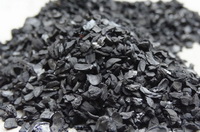 Brief Introduction: Activated charcoal is made from charred wood, peat moss, or other vegetable matter. This fine black powder is specially processed to enhance its adsorption capacity. Activated carbon is primarily composed of carbon and contains small amounts of oxygen, hydrogen, sulfur, nitrogen, chlorine, and other elements. Its structure is irregular, with pores formed between cross-linked carbon networks. During activation, carbon lattice defects are generated, resulting in low bulk density, large specific surface area, and strong adsorption performance. It is an industrially important adsorbent with wide-ranging applications. The specific surface area of ordinary activated carbon ranges from 500 to 1700 m2/g. more
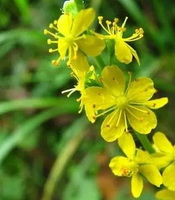 Brief Introduction: Agrimonia eupatoria is an aromatic perennial native to the Northern Hemisphere. Its yellow flowering tops are used medicinally. Star-shaped flowers bloom along an erect stem, forming tall spikes. Although less commonly used, the small hooked fruits, leaves, and roots have also been employed in traditional medicine. more
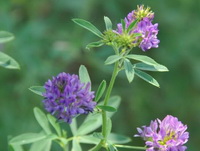 Brief Introduction: Medicago sativa is a forage legume. Its high protein content makes it suitable for livestock feed. It possesses a tetraploid genome. Medicago sativa was likely domesticated in the eastern Mediterranean region during the Bronze Age to feed horses imported from Central Asia and later spread to Europe. more
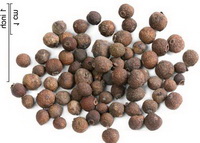 Brief Introduction: The main producing regions of allspice are Jamaica, Cuba, and other countries in Central and South America. It is a plant native to and cultivated exclusively on the American continent. It thrives in hot, humid tropical climates—not arid areas. After drying, the berries emit an aromatic profile reminiscent of cinnamon, clove, and nutmeg, hence the name “allspice.” more
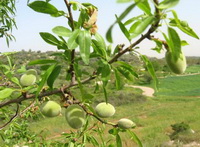 Brief Introduction: Prunus amygdalus, a flowering deciduous tree of the Rosaceae family (rose family), is native to Western Asia and has been cultivated for thousands of years. Though commonly called “almond,” it belongs to the Amygdalus subgenus—not the true almond (Prunus dulcis, formerly Amygdalus communis), which is now widely accepted as a synonym or variant. more
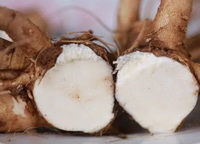 Brief Introduction: Angelica archangelica, commonly known as garden angelica or Angel’s wort, is used medicinally in multiple parts: seed, whole aerial herb, and root. “Angelica herb” refers to the dried above-ground parts; “angelica root” refers to the dried root and rhizome. It is sometimes cited under the synonym Archangelica officinalis (Moench) Hoffm. Other Angelica species—including North American Angelica atropurpurea—are also used medicinally in certain traditions. more
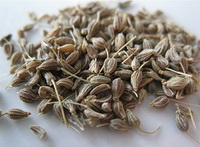 Brief Introduction: Pimpinella anisum is an annual herb cultivated for its licorice-scented fruits—commonly known as aniseed. The dried fruits are used as a culinary spice and medicinal herb; young seedlings may be consumed as leafy greens or salad vegetables. more
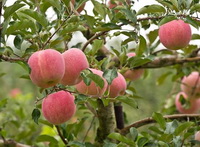 Brief Introduction: Apple is the fleshy, seeded, edible fruit of trees in the genus Malus. The graceful, flowering apple tree is native to temperate regions of the Northern Hemisphere. The genus Malus comprises over 1,000 cultivated varieties. Its fruits vary in size, exhibit sweet-tart flavors, and occur in red, yellow, and green hues; textures range from mealy to crisp. more
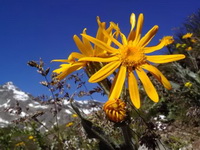 Brief Introduction: Arnica refers to the dried flower heads of Arnica montana L. or other Arnica species native to the United States of America. Species used include Arnica fulgens Pursh., Arnica sororia Greene, Arnica latifolia Bong., and Arnica cordifolia Hook. Arnica is classified as a protected species in many countries. more
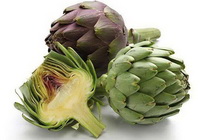 Brief Introduction: Artichokes have been consumed safely in Europe and the United States of America for hundreds of years. Native to the Mediterranean coast, the plant thrives in warm, humid climates. It possesses a distinctive flavor and exceptional nutritional value, earning it the title “King of Vegetables.” Beyond fresh consumption, artichokes are processed into salted, quick-frozen, or canned products. The outer bracts of immature flower buds are used to prepare health-promoting herbal teas; stems and leaves serve as functional animal feed or are further refined into dietary supplements, apéritifs, oral capsules, and cosmetic ingredients. Additionally, artichoke is an ornamental plant: when mature, its large flower heads open to reveal striking violet-blue florets—reminiscent of sapphires—in vivid, captivating display. more
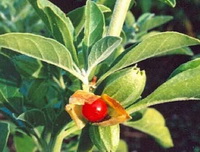 Brief Introduction: This small evergreen undershrub grows in the Mediterranean region, West Asia, and North Africa. It bears showy greenish-yellow flowers. The dried roots, fruits (berries), and oval leaves are used medicinally. more
