✵This article documents the herb artichoke, including its English name, Latin name, Pinyin name, common names, properties and flavors, and botanical source—the single species (1) Cynara scolymus L. It provides a detailed description of the botanical features, growth characteristics, ecological environment, brief historical background, macroscopic and microscopic characteristics of the herb, its pharmacological actions, medicinal efficacy, and administration guidelines.
Artichoke (Cynara scolymus)
English Name: Artichoke
Latin Name:Cynara scolymus L.; Cynarae folium Pinyin Name: Cài Jì; Yáng Jì
Common Names: Globe artichoke, garden artichoke, artichoke thistle, cardoon, wild artichoke, desert artichoke
Properties and Flavor: Neutral in nature; sweet taste
Brief Introduction: Artichokes have been consumed safely in Europe and the United States of America for hundreds of years. Native to the Mediterranean coast, the plant thrives in warm, humid climates. It possesses a distinctive flavor and exceptional nutritional value, earning it the title “King of Vegetables.” Beyond fresh consumption, artichokes are processed into salted, quick-frozen, or canned products. The outer bracts of immature flower buds are used to prepare health-promoting herbal teas; stems and leaves serve as functional animal feed or are further refined into dietary supplements, apéritifs, oral capsules, and cosmetic ingredients. Additionally, artichoke is an ornamental plant: when mature, its large flower heads open to reveal striking violet-blue florets—reminiscent of sapphires—in vivid, captivating display.
Botanical Source: Traditional herbal classics define the medicinal herb artichoke as the dried leaves of Cynara scolymus L. It is a perennial species in the genus Cynara, Asteraceae family (daisy or composite family). While leaves are the primary medicinal part, the receptacle (edible “heart”) and flower bracts are also utilized in food and phytotherapy. This sole species is described below:
(1) Cynara scolymus L.
Botanical Description:Cynara scolymus L. is a robust, perennial herb in the Asteraceae family, reaching up to 2 m in height. Stems are erect, stout, prominently ribbed, and branched in the upper portion; all stems and branches bear dense, whitish, spider-silk-like tomentum. Basal leaves form a large rosette; lower stem leaves are oblong to broadly lanceolate—up to 1 m long and 50 cm wide—deeply bipinnatifid, with gradually tapering bases and long petioles. Middle and upper stem leaves decrease progressively in size, becoming sessile or decurrent along the stem. Leaves subtending the inflorescence are oval to linear, up to 5 cm long. Upper leaf surfaces are green and glabrous; lower surfaces are grayish-white and covered with dense to sparse, soft, white villi. Secondary lobes and leaf apices lack rigid, needle-like spines. Flower heads are large and terminal on branched peduncles. Involucral bracts are multilayered, subcoriaceous, and nearly glabrous; middle and outer bracts taper gradually to acute (not spinose) tips; inner bracts bear short, stiff, dura appendages at their apices. Florets are purplish-red; corolla length ≈ 4.5 cm (tubular portion ≈ 2.8 cm; limb ≈ 1.7 cm; corolla lobes ≈ 9 mm). Pappus is white, multilayered, ≈ 3.6 cm long, bristle-like and attenuated to a fine apex; its base is connate into a ring and detaches en masse. Flowering occurs from June to July. Corollas are violet-blue, lilac, or occasionally white. The fruit is a pubescent, oblong, 4-angled achene, 4–5 mm in diameter and 7–8 mm long, with a truncate apex, glossy surface, and brown mottling.
Ecological Environment:Cynara scolymus is native to the Mediterranean region and prefers a warm, humid climate. It is also found in the Canary Islands and South America. The total global planting area of artichoke is about 80,000 ha (hectares), 85% of which is concentrated in countries of the Mediterranean basin. The main producing countries are Italy, Spain, and France; it is now also cultivated in California (USA), South America, parts of Asia, and other regions.
Brief History of the Artichoke: The artichoke thistle was used as food and a medicinal remedy as early as the 4th century B.C., giving the plant a long history. At that time, Theophrastus [1], a pupil of Aristotle [2], described the plant in detail. Enjoyed as a delicacy, appetizer, and digestive aid by the aristocracy of the Roman Empire [3], it later seems to have fallen into oblivion until the 16th century, when its medicinal use for liver problems and jaundice was recorded. In 1850, a French physician successfully treated a boy who had suffered from jaundice for one month and had shown no improvement with conventional medicine, using an extract of artichoke leaves. This achievement inspired researchers to investigate its effects further, leading to the current understanding of its constituents and mechanisms of action.
The artichoke is one of the oldest cultivated plants. It was first grown in Ethiopia and then spread to Southern Europe via Egypt. Its image appears on ancient Egyptian tablets and sacrificial altars. The ancient Greeks and Romans valued it as a digestive aid and reserved this then-rare plant for elite consumption. In 16th-century Europe, the artichoke was also regarded as a “noble” vegetable; its flower buds are commonly cooked and eaten as a vegetable.
In traditional European medicine, artichoke leaves were used as a diuretic to stimulate kidney function and as a choleretic to promote bile flow from the liver and gallbladder.
In the first half of the 20th century, French scientists began modern research into these traditional medicinal uses of the artichoke. Their work confirmed that the plant does indeed stimulate kidney and gallbladder function. In the mid-20th century, Italian scientists isolated a compound from artichoke leaves called cynarin, which replicated many of the effects of the whole plant. Synthetic cynarin preparations were used clinically to stimulate the liver and gallbladder and to treat elevated cholesterol levels from the 1950s to the 1980s.
Characteristics of the Herb: Primarily, the leaves of Cynara scolymus are used medicinally. The upper leaf surface is glabrous and light green; the lower surface is grayish and tomentose. Leaves are harvested in summer, washed thoroughly, and dried in the sun.
Medicinal Efficacy: Preparations of Cynara scolymus leaves are used to formulate granules for treating hepatitis, hepatobiliary disorders, digestive system diseases, kidney diseases, and allergic conditions. The herb soothes the liver and benefits the gallbladder, clearing damp-heat. It is indicated for jaundice, hypochondriac distension and pain, damp-heat diarrhea, and hepatitis. It contains numerous bioactive compounds, including cynarin, asparagine, and flavonoids. Regular consumption of artichoke plays an important role in protecting the liver and kidneys, enhancing hepatic detoxification, promoting intestinal digestion, and supporting cardiovascular health. Documented benefits include hepatorenal protection, enhanced liver detoxification, improved digestion, better blood circulation, prevention of arteriosclerosis, and cardiovascular protection. Traditionally, it is used for liver disease, jaundice, indigestion, atherosclerosis, anemia, snakebite, as a diuretic, to stimulate bile production, to lower cholesterol, and to support digestion.
Administration of Artichoke (Cynara scolymus):
Reference:
Administration Guide for Artichoke (Cynara scolymus)
Herbal classic works and TCM works:
Internally, the herb is administered as a water decoction, 6–15 grams per day. Capsules standardized to contain 15 mg of caffeoylquinic acids are recommended at a dosage of two to three capsules daily.
Contraindications, Precautions, and Adverse Reactions: The U.S. FDA classifies artichoke leaf as Generally Recognized as Safe (GRAS) for use as a food ingredient. It is contraindicated in individuals with gallstones or biliary duct obstruction. Allergic contact dermatitis may occur in sensitized individuals upon contact with the fresh plant.
Explanatory Notes:
1. Theophrastus: Greek Peripatetic philosopher.
2. Aristotle: Greek philosopher and scientist.
3. Roman Empire: Ancient state, 27 B.C.–476 A.D.
References:
1.Introduction of of Artichoke: Artichoke Thistle.

 ✵This article documents the herb artichoke, including its English name, Latin name, Pinyin name, common names, properties and flavors, and botanical source—the single species (1) Cynara scolymus L. It provides a detailed description of the botanical features, growth characteristics, ecological environment, brief historical background, macroscopic and microscopic characteristics of the herb, its pharmacological actions, medicinal efficacy, and administration guidelines.
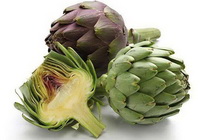 English Name: Artichoke
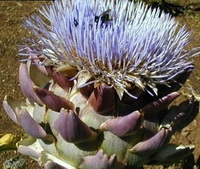 Botanical Description: Cynara scolymus L. is a robust, perennial herb in the Asteraceae family, reaching up to 2 m in height. Stems are erect, stout, prominently ribbed, and branched in the upper portion; all stems and branches bear dense, whitish, spider-silk-like tomentum. Basal leaves form a large rosette; lower stem leaves are oblong to broadly lanceolate—up to 1 m long and 50 cm wide—deeply bipinnatifid, with gradually tapering bases and long petioles. Middle and upper stem leaves decrease progressively in size, becoming sessile or decurrent along the stem. Leaves subtending the inflorescence are oval to linear, up to 5 cm long. Upper leaf surfaces are green and glabrous; lower surfaces are grayish-white and covered with dense to sparse, soft, white villi. Secondary lobes and leaf apices lack rigid, needle-like spines. Flower heads are large and terminal on branched peduncles. Involucral bracts are multilayered, subcoriaceous, and nearly glabrous; middle and outer bracts taper gradually to acute (not spinose) tips; inner bracts bear short, stiff, dura appendages at their apices. Florets are purplish-red; corolla length ≈ 4.5 cm (tubular portion ≈ 2.8 cm; limb ≈ 1.7 cm; corolla lobes ≈ 9 mm). Pappus is white, multilayered, ≈ 3.6 cm long, bristle-like and attenuated to a fine apex; its base is connate into a ring and detaches en masse. Flowering occurs from June to July. Corollas are violet-blue, lilac, or occasionally white. The fruit is a pubescent, oblong, 4-angled achene, 4–5 mm in diameter and 7–8 mm long, with a truncate apex, glossy surface, and brown mottling.
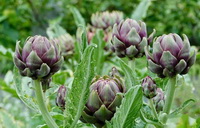 Ecological Environment: Cynara scolymus is native to the Mediterranean region and prefers a warm, humid climate. It is also found in the Canary Islands and South America. The total global planting area of artichoke is about 80,000 ha (hectares), 85% of which is concentrated in countries of the Mediterranean basin. The main producing countries are Italy, Spain, and France; it is now also cultivated in California (USA), South America, parts of Asia, and other regions.
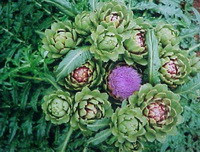 Brief History of the Artichoke: The artichoke thistle was used as food and a medicinal remedy as early as the 4th century B.C., giving the plant a long history. At that time, Theophrastus [1], a pupil of Aristotle [2], described the plant in detail. Enjoyed as a delicacy, appetizer, and digestive aid by the aristocracy of the Roman Empire [3], it later seems to have fallen into oblivion until the 16th century, when its medicinal use for liver problems and jaundice was recorded. In 1850, a French physician successfully treated a boy who had suffered from jaundice for one month and had shown no improvement with conventional medicine, using an extract of artichoke leaves. This achievement inspired researchers to investigate its effects further, leading to the current understanding of its constituents and mechanisms of action.
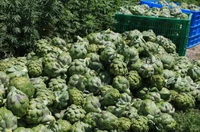 Characteristics of the Herb: Primarily, the leaves of Cynara scolymus are used medicinally. The upper leaf surface is glabrous and light green; the lower surface is grayish and tomentose. Leaves are harvested in summer, washed thoroughly, and dried in the sun.
