✵The article documents the herb Angelica, including its English name, Latin name, Pinyin name, common names, properties and flavor, and botanical source—namely one plant species, Angelica archangelica L.—with a detailed description of its botanical features, growth characteristics, ecological environment, herbal characteristics, pharmacological actions, medicinal efficacy, and administration guidelines.
Angelica (Angelica archangelica)
English Name: Angelica
Latin Name:Angelica archangelica L
Pinyin Name: Ōu Bái Zhǐ
Common Names: American angelica, European angelica, garden angelica, masterwort, wild angelica, wild celery, Angel’s wort
Property and Flavor: Sweet in taste; slightly musky aroma
Brief Introduction:Angelica archangelica, commonly known as garden angelica or Angel’s wort, is used medicinally in multiple parts: seed, whole aerial herb, and root. “Angelica herb” refers to the dried above-ground parts; “angelica root” refers to the dried root and rhizome. It is sometimes cited under the synonym Archangelica officinalis (Moench) Hoffm. Other Angelica species—including North American Angelica atropurpurea—are also used medicinally in certain traditions.
Botanical Source: Traditional herbal classics define Angelica as the dried root and rhizome of Angelica archangelica L. It is a species of the genus Angelica, family Apiaceae (Umbelliferae, the parsley family). The seed, whole herb, and root are all used medicinally. This widely employed species is described below:
(1) Angelica archangelica L.
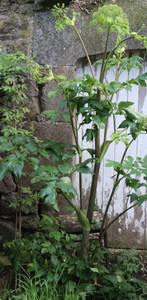
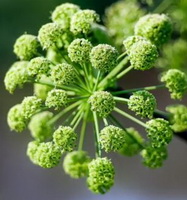
Botanical Description:Angelica archangelica grows 0.5–2.5 m tall. It possesses a short, stout, succulent rhizome and long fibrous roots. The stem is erect, thick, and hollow; the basal diameter reaches ~6 cm; the lower portion is rounded, finely grooved, and often reddish-tinged. Leaves are large (up to 60–90 cm), tripinnate, with hollow petioles, ovate leaflets, and unevenly serrated margins; leaf sheaths are prominent and swollen. Flowers are greenish-white to yellowish, arranged in compact, 20–40-rayed umbels lacking an involucre. Each flower has a small epicalyx with numerous minute-tipped sepals; petals bear a characteristic indented apex. The fruit is elliptic, 7 mm long × 4 mm wide, dorsally winged, with a thin membranous layer separating the exocarp from the endocarp.
Ecological Environment:Angelica archangelica is native to northern and central Europe—not Syria, the Netherlands, or Poland as isolated points—but historically distributed across temperate regions from the coasts of the North and Baltic Seas northward to Lapland and Iceland. In Iceland, it is a protected species and cultivated elsewhere. It also occurs naturally in Northern Europe, Iceland, and Greenland. Other species include Angelica atropurpurea (North America), Angelica sylvestris (Europe), and Angelica sinensis (Asia).
Growth characteristics: The plant thrives in partial shade—such as woodland edges or dappled shade—and prefers deep, moist, fertile soil; it tolerates full sun if soil moisture is consistently adequate.
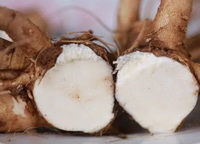
Characteristics of the Herb: The rhizome is short, stout, and succulent, bearing long fibrous roots.
Historical Note on Angelica archangelica: In the 16th century, Angelica archangelica spread from northern Africa to warmer regions of Europe. Because it typically flowers for the first time on May 8—the feast day of St. Michael the Archangel [1]—it became associated with sacred and mystical ceremonies. This connection explains its frequent cultivation in monasteries and its common name, “Angel’s wort.”
Pharmacological Actions: (1) Relief of dyspeptic symptoms; (2) Appetite stimulation; (3) Mild rubefacient effect; etc.
Medicinal Efficacy: In North America, the herb is primarily used for respiratory conditions—including cough and bronchitis—as well as arthritis and rheumatic complaints, dysmenorrhea or oligomenorrhea, appetite stimulation, carminative effects, and relief of other digestive disturbances. It is also employed as a flavoring agent in alcoholic beverages and as a fragrance ingredient. In folk medicine, root preparations are used as a mild rubefacient and for cough, bronchitis, menstrual disorders, anorexia, dyspepsia accompanied by mild gastrointestinal cramps, and hepatic and biliary tract dysfunction. Seed preparations are administered internally for urinary tract disorders (including renal and ureteral conditions), intestinal complaints, respiratory ailments, rheumatic pain, and neuralgia. A seed-based ointment is applied topically for pediculosis corporis (body lice). Leaf preparations have been used as diuretics and diaphoretics.
Administration of Angelica (Angelica archangelica):
Reference:
Administration Guide for Angelica (Angelica archangelica)
Herbal Classic Works:
The standard infusion dosage is 1 teaspoon (approximately 2–3 g) of powdered seeds or leaves per cup (240 mL) of boiling water, steeped for 10–20 minutes. Decoctions are prepared using 1 teaspoon (2–3 g) of powdered root per cup of water, simmered for 2 minutes, and consumed in divided doses up to 2 cups daily. Recommended daily dosages include: 4.5 grams of dried herb; 1.5 mL of tincture; and 10–20 drops of essential oil.
Contraindications, Precautions, and Adverse Reactions: No serious health hazards or adverse effects are reported with therapeutic doses when used appropriately. However, due to its furocoumarin content, the herb may cause photodermatitis; therefore, direct sun exposure and intense UV radiation should be avoided during treatment.
Explanatory Notes:
1. St. Michael the Archangel: One of the principal archangels mentioned in the Bible.

 ✵The article documents the herb Angelica, including its English name, Latin name, Pinyin name, common names, properties and flavor, and botanical source—namely one plant species, Angelica archangelica L.—with a detailed description of its botanical features, growth characteristics, ecological environment, herbal characteristics, pharmacological actions, medicinal efficacy, and administration guidelines.
 English Name: Angelica
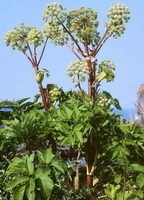 Botanical Description: Angelica archangelica grows 0.5–2.5 m tall. It possesses a short, stout, succulent rhizome and long fibrous roots. The stem is erect, thick, and hollow; the basal diameter reaches ~6 cm; the lower portion is rounded, finely grooved, and often reddish-tinged. Leaves are large (up to 60–90 cm), tripinnate, with hollow petioles, ovate leaflets, and unevenly serrated margins; leaf sheaths are prominent and swollen. Flowers are greenish-white to yellowish, arranged in compact, 20–40-rayed umbels lacking an involucre. Each flower has a small epicalyx with numerous minute-tipped sepals; petals bear a characteristic indented apex. The fruit is elliptic, 7 mm long × 4 mm wide, dorsally winged, with a thin membranous layer separating the exocarp from the endocarp.
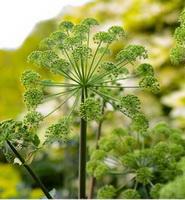 Ecological Environment: Angelica archangelica is native to northern and central Europe—not Syria, the Netherlands, or Poland as isolated points—but historically distributed across temperate regions from the coasts of the North and Baltic Seas northward to Lapland and Iceland. In Iceland, it is a protected species and cultivated elsewhere. It also occurs naturally in Northern Europe, Iceland, and Greenland. Other species include Angelica atropurpurea (North America), Angelica sylvestris (Europe), and Angelica sinensis (Asia).
 Characteristics of the Herb: The rhizome is short, stout, and succulent, bearing long fibrous roots.
 Medicinal Efficacy: In North America, the herb is primarily used for respiratory conditions—including cough and bronchitis—as well as arthritis and rheumatic complaints, dysmenorrhea or oligomenorrhea, appetite stimulation, carminative effects, and relief of other digestive disturbances. It is also employed as a flavoring agent in alcoholic beverages and as a fragrance ingredient. In folk medicine, root preparations are used as a mild rubefacient and for cough, bronchitis, menstrual disorders, anorexia, dyspepsia accompanied by mild gastrointestinal cramps, and hepatic and biliary tract dysfunction. Seed preparations are administered internally for urinary tract disorders (including renal and ureteral conditions), intestinal complaints, respiratory ailments, rheumatic pain, and neuralgia. A seed-based ointment is applied topically for pediculosis corporis (body lice). Leaf preparations have been used as diuretics and diaphoretics.
