Lingzhi Mushroom: Other Identified Special Species (34) Ganoderma dahlii
✵The article records another identified special species of Lingzhi mushroom—(34) Ganoderma dahlii—including its English name, Latin name, Pinyin name, properties and flavor. It provides a detailed introduction to the botanical features, growth characteristics, and ecological environment of this species; its morphological characteristics; pharmacological actions, medicinal efficacy, and administration guidelines.
Other Identified Special Species of Lingzhi Mushroom (34) Ganoderma dahlii
Botanical description:Ganoderma dahlii (Henn.) Aoshima is a fungus in the family Ganodermataceae (or Polyporaceae) and genus Ganoderma. It is commonly known as Ganoderma dahlii, Small-hole Chestnut-brown Ganoderma, or Xiaokonglihe Lingzhi. The basidiocarp (fruiting body) is relatively large, sessile or shortly stipitate. The pileus (cap) is 6.5–12 cm in diameter, orbicular (nearly circular); the surface is chestnut brown or dark brown (nearly black), fan-shaped, glossy, with concentric rings and distinct radial wrinkles; the margin is entire or valviform (petaloid); the context is brown; pores are orbicular, 6–7 per millimeter; the stipe—when present—is pleurogenous, 2–5 cm long and 2.3–3 cm thick. The basidiospores are rust-brown, broadly ovoid to ovoid, with spinulate inner walls.
Ecological Environment:Ganoderma dahlii (Henn.) Aoshima grows on decaying wood in mountainous forests and causes white rot. This species is endemic to China.
References:
1. Introduction of Ling Zhi: Ganoderma lucidum, Fairy Grass.
2. Lingzhi Mushroom: Other Identified Special Species — Ganoderma dahlii.

 ✵The article records another identified special species of Lingzhi mushroom—(34) Ganoderma dahlii—including its English name, Latin name, Pinyin name, properties and flavor. It provides a detailed introduction to the botanical features, growth characteristics, and ecological environment of this species; its morphological characteristics; pharmacological actions, medicinal efficacy, and administration guidelines.
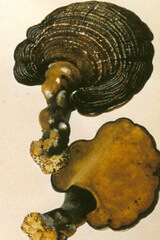 Botanical description: Ganoderma dahlii (Henn.) Aoshima is a fungus in the family Ganodermataceae (or Polyporaceae) and genus Ganoderma. It is commonly known as Ganoderma dahlii, Small-hole Chestnut-brown Ganoderma, or Xiaokonglihe Lingzhi. The basidiocarp (fruiting body) is relatively large, sessile or shortly stipitate. The pileus (cap) is 6.5–12 cm in diameter, orbicular (nearly circular); the surface is chestnut brown or dark brown (nearly black), fan-shaped, glossy, with concentric rings and distinct radial wrinkles; the margin is entire or valviform (petaloid); the context is brown; pores are orbicular, 6–7 per millimeter; the stipe—when present—is pleurogenous, 2–5 cm long and 2.3–3 cm thick. The basidiospores are rust-brown, broadly ovoid to ovoid, with spinulate inner walls.
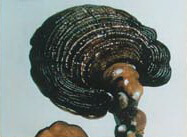 Ecological Environment: Ganoderma dahlii (Henn.) Aoshima grows on decaying wood in mountainous forests and causes white rot. This species is endemic to China.
