Lingzhi mushroom: Other Identified Common Species: (11) Ganoderma mongolicum.
✵The article records other identified common species of the Lingzhi mushroom—(11) Ganoderma mongolicum—including its English name, Latin name, pinyin name, properties and flavor, and provides a detailed introduction to the botanical features, growth characteristics, and ecological environment of these species; their morphological features; pharmacological actions; medicinal efficacy; and administration guidelines.
Other Identified Common Species of the Lingzhi Mushroom: (11) Ganoderma mongolicum.
Botanical Description:Ganoderma mongolicum Pilát is a fungus in the family Ganodermataceae (or Polyporaceae) and genus Ganoderma. It is commonly known as Neimeng Ganoderma, Neimeng Lingzhi, or Hebei Lingzhi. The pileus (cap) is 5–10 cm in diameter, circular or reniform. The cuticle is dull (unlustrous), dirty ochre (auburn) to brown, darkening with age; it lacks distinct ring patterns or exhibits only faint ones. The margin is concolorous; the surface is wrinkled or verruculose, shrunken, and bears dense, scaly dehiscence. The stipe (if present) is lateral or vertical, 5–8 cm long and 2–3 cm thick; its cuticle is glossy, purple to blackish. The tubes are 5–10 mm long, brittle, brown to fuscid (dark brown), often developing reticulate cracks upon drying. The pores and tubes share the same color; pore diameter is 0.15–0.3 mm, circular or nearly angular. Hyphae are 1–6 μm in diameter and pachypleurous (thick-walled). The context is 10–20 mm thick, wood-colored, suberose, quite brittle, and slightly harder than Ganoderma lucidum.
The basidiospores are brown and obovate, with a nearly truncate base or a colorless conical umbilicus bearing spinules, measuring 9–12 × 6.5–8 μm. This species is genetically closely related to Ganoderma lucidum.
Ecological Environment:Ganoderma mongolicum Pilát grows in forests and mountainous regions. This species is primarily distributed in China.
References:
1. Introduction of Ling Zhi: Ganoderma lucidum, Fairy Grass.
2. Lingzhi mushroom:Other Identified Common Species:Ganoderma monglicum.

 ✵The article records other identified common species of the Lingzhi mushroom—(11) Ganoderma mongolicum—including its English name, Latin name, pinyin name, properties and flavor, and provides a detailed introduction to the botanical features, growth characteristics, and ecological environment of these species; their morphological features; pharmacological actions; medicinal efficacy; and administration guidelines.
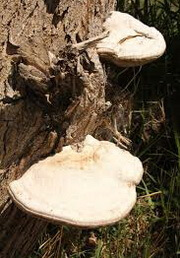 Botanical Description: Ganoderma mongolicum Pilát is a fungus in the family Ganodermataceae (or Polyporaceae) and genus Ganoderma. It is commonly known as Neimeng Ganoderma, Neimeng Lingzhi, or Hebei Lingzhi. The pileus (cap) is 5–10 cm in diameter, circular or reniform. The cuticle is dull (unlustrous), dirty ochre (auburn) to brown, darkening with age; it lacks distinct ring patterns or exhibits only faint ones. The margin is concolorous; the surface is wrinkled or verruculose, shrunken, and bears dense, scaly dehiscence. The stipe (if present) is lateral or vertical, 5–8 cm long and 2–3 cm thick; its cuticle is glossy, purple to blackish. The tubes are 5–10 mm long, brittle, brown to fuscid (dark brown), often developing reticulate cracks upon drying. The pores and tubes share the same color; pore diameter is 0.15–0.3 mm, circular or nearly angular. Hyphae are 1–6 μm in diameter and pachypleurous (thick-walled). The context is 10–20 mm thick, wood-colored, suberose, quite brittle, and slightly harder than Ganoderma lucidum.
