Lingzhi Mushroom: Other Identified Common Species: (18) Ganoderma applanatum.
✵The article records other identified common species of the Lingzhi mushroom—(18) Ganoderma applanatum—including its English name, Latin name, Pinyin name, properties and flavor, as well as a detailed introduction to the botanical features, growth characteristics, and ecological environment of these species; the morphological features of the fungi; their pharmacological actions, medicinal efficacy, and administration guidelines.
Other Identified Common Species of Lingzhi Mushroom: (18) Ganoderma applanatum.
Pinyin Name: Shù Shé Líng Zhī
English Name: Tree-tongue Ganoderma or Artist’s Conk
Latin Name:Ganoderma applanatum Properties and Flavor: Neutral; taste light or bland.
Botanical Description:Ganoderma applanatum (Pers. ex Gray) Pat. is a fungus in the family Ganodermataceae (or Polyporaceae) and genus Ganoderma. It is also known as Ganoderma applanatum (Pers. ex Wallr.) Pat. Common names include Tree-tongue Ganoderma, Shùshélíngzhī, Flat Tree-tongue Ganoderma, Lǎomùjūn, Maple-tree Ganoderma, Pínggǎilíngzhī, Chìsèlǎomùjūn, Biānzhī, Lǐjūn, Fēngshùzhī, Báibānfújūn, Lǎoniúgān, Mùlíngzhī, Shù’ěrduō, among others.
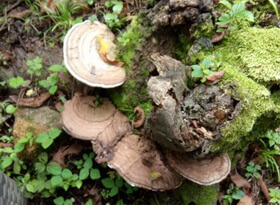
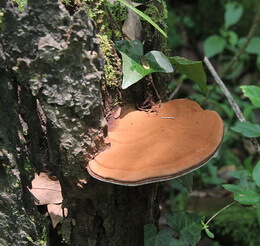
The basidiocarp (fruiting body) is large to very large, sessile or subsessile. The pileus (cap) is semicircular, flattened hemispherical, or nearly flat; the margin is often decurrent. Dimensions range from 5–35 × 10–50 cm in width and 1–12 cm in thickness. The surface is grayish, gradually becoming brownish, with conspicuous concentric ridges; it is occasionally tuberculate. The cuticle is gelatinous and coriaceous. The margin is thinner. The context is light chestnut (spadiceous), sometimes darkening to brown near the hymenium; the pores are circular, 4–5 per millimeter.
Ecological Environment:Ganoderma applanatum (Pers. ex Gray) Pat. grows on hardwood trees—including poplar, birch, willow, and oak—in mountainous forests and woodlands. It commonly colonizes fallen logs and stumps and is an important white-rot fungus causing white rot of xylem. This species is widely distributed across China and occurs globally in temperate and subtropical regions.
In traditional Chinese folk medicine, it is used for its anti-cancer properties and to treat rheumatoid arthritis and pulmonary tuberculosis. Its actions include analgesia, clearing heat, resolving accumulation and stagnation, hemostasis, and resolving phlegm.
Growth Characteristics:Ganoderma applanatum grows on the trunks of various broad-leaved trees.
Characteristics of the Herb: The basidiocarp (fruiting body) is sessile. The pileus (cap) is semicircular, flat, or hemispherical in outline, measuring 10–50 cm in maximum diameter, 5–35 cm in minimum diameter, and up to 15 cm in thickness. The surface is grayish or brownish, with concentric ridges and irregular tubercles. The cuticle is brittle, and the margin is thin and blunt. The pore surface is dirty yellow to dark brown; the pores are circular, 4–6 per mm. In longitudinal section, one to several layers of tubes are visible. The texture is lignified or suberose. The odor is mild, and the taste is bland.
Medicinal efficacy: Anti-inflammatory and antitumor. It is indicated for pharyngolaryngitis (sore throat), esophageal carcinoma, nasopharyngeal carcinoma, among others.
Administration of Ganoderma applanatum (Shùshélíngzhī):
Reference:
Administration Guide for Ganoderma applanatum (Shùshélíngzhī)
TCM Books:
Internally: water decoction, 10–30 grams.
References:
1. Introduction of Ling Zhi: Ganoderma lucidum, Fairy Grass.
2. Lingzhi Mushroom: Other Identified Common Species: Ganoderma applanatum.

 ✵The article records other identified common species of the Lingzhi mushroom—(18) Ganoderma applanatum—including its English name, Latin name, Pinyin name, properties and flavor, as well as a detailed introduction to the botanical features, growth characteristics, and ecological environment of these species; the morphological features of the fungi; their pharmacological actions, medicinal efficacy, and administration guidelines.
 Pinyin Name: Shù Shé Líng Zhī
 Ecological Environment: Ganoderma applanatum (Pers. ex Gray) Pat. grows on hardwood trees—including poplar, birch, willow, and oak—in mountainous forests and woodlands. It commonly colonizes fallen logs and stumps and is an important white-rot fungus causing white rot of xylem. This species is widely distributed across China and occurs globally in temperate and subtropical regions.
