Lingzhi Mushroom: Other Identified Common Species: (15) Ganoderma capense
✵The article records other identified common species of the Lingzhi mushroom—(15) Ganoderma capense—including its English name, Latin name, Pinyin name, properties and flavor, and provides a detailed introduction to the botanical features, growth characteristics, and ecological environment of these species; the morphological features of the fungi; their pharmacological actions, medicinal efficacy, and administration guidelines.
Other Identified Common Species of Lingzhi mushroom:(15) Ganoderma capense.
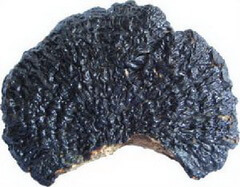
Botanical Description:Ganoderma capense (Lloyd) D. A. Reid is a fungus in the family Ganodermataceae (or Polyporaceae) and genus Ganoderma. It is commonly known as Thin-cover Ganoderma or Bogai Lingzhi. The basidiocarp (fruiting body) is annual and suberose. The pileus (cap) is semicircular, conchoidal, or fan-shaped, measuring 7.5–9 × 8–10 cm, with a thickness of approximately 1 cm. The surface is puce (purple-brown); the margin is sometimes lighter in color—maroon (brownish-red) to brownish-yellow—with a lacquer-like luster, concentric rings, and wrinkles. The margin is thin and intact, occasionally valviform. The context is uniformly rusty brown, about 0.3 cm thick. The tubes are brown, approximately 0.6 cm long. The pore surface is dirty white to rusty brown; fresh specimens show exudate droplets; the pores are circular, 4–5 per mm.
The hymenium is a sporiferous layer type; the composite hyphae are clavate, with enlarged apices 3–6 μm wide and 10–20 μm long.
The mycelial system is trimitic: generative hyphae are colorless and transparent, septate, and often distorted, 4–7 μm in diameter; skeletal hyphae are fawn-colored (flavotestaceous), pachypleurous (thick-walled) to farctate, with occasional dendritic branching at the tips, 5–6.7 μm in diameter; binding hyphae are the same color as skeletal hyphae, branched, and mostly curved, 1.7–3.3 μm in diameter.
The basidiospores are ovoid (egg-shaped), truncate at the apex; the outer wall is colorless and transparent; the inner wall is pale yellow to pale brown, bearing spinules, and sometimes contains oil droplets in the central region; dimensions: 8.8–11.3 × 6–7.5 (–9) μm.
Ecological Environment:Ganoderma capense (Lloyd) D. A. Reid grows in mountainous forests. This species is mainly distributed in China and also occurs in other regions.
References:
1. Introduction of Ling Zhi: Ganoderma lucidum, Fairy Grass.
2. Lingzhi Mushroom: Other Identified Common Species: (15) Ganoderma capense

 ✵The article records other identified common species of the Lingzhi mushroom—(15) Ganoderma capense—including its English name, Latin name, Pinyin name, properties and flavor, and provides a detailed introduction to the botanical features, growth characteristics, and ecological environment of these species; the morphological features of the fungi; their pharmacological actions, medicinal efficacy, and administration guidelines.
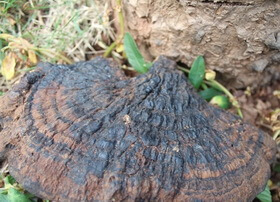 Botanical Description: Ganoderma capense (Lloyd) D. A. Reid is a fungus in the family Ganodermataceae (or Polyporaceae) and genus Ganoderma. It is commonly known as Thin-cover Ganoderma or Bogai Lingzhi. The basidiocarp (fruiting body) is annual and suberose. The pileus (cap) is semicircular, conchoidal, or fan-shaped, measuring 7.5–9 × 8–10 cm, with a thickness of approximately 1 cm. The surface is puce (purple-brown); the margin is sometimes lighter in color—maroon (brownish-red) to brownish-yellow—with a lacquer-like luster, concentric rings, and wrinkles. The margin is thin and intact, occasionally valviform. The context is uniformly rusty brown, about 0.3 cm thick. The tubes are brown, approximately 0.6 cm long. The pore surface is dirty white to rusty brown; fresh specimens show exudate droplets; the pores are circular, 4–5 per mm.
 The basidiospores are ovoid (egg-shaped), truncate at the apex; the outer wall is colorless and transparent; the inner wall is pale yellow to pale brown, bearing spinules, and sometimes contains oil droplets in the central region; dimensions: 8.8–11.3 × 6–7.5 (–9) μm.
