Lingzhi Mushroom: Other Cultivated Species — (5) Ganoderma multiplicatum
✵The article documents other cultivated species of Lingzhi mushroom, including (5) Ganoderma multiplicatum, along with their English names, Latin names, Pinyin names, properties and flavors. It also provides a detailed introduction to the botanical features, growth characteristics, and ecological environments of these cultivated fungal species; their morphological characteristics; pharmacological actions; medicinal efficacies; and administration guidelines.
Lingzhi Mushroom: Other Cultivated Species — (5) Ganoderma multiplicatum
Approximately 250 species belong to the genus Ganoderma worldwide. In China, about 98–100 Ganoderma species have been documented within the family Ganodermataceae. They are distributed across southern to northern regions of the country.
Botanical Description:Ganoderma multiplicatum (Mont.) Pat. is a fungus in the family Ganodermataceae (formerly placed in Polyporaceae) and genus Ganoderma. It is commonly known as Yellow Ganoderma or Huang Lingzhi (meaning “Yellow Lingzhi”). The basidiocarp (fruiting body) is annual and sessile, suberose to lignified. The pileus (cap) is rimose (cracked), orbicular to subrotund, measuring 9 × 12 cm. Its surface exhibits alternating broad brown and khaki concentric rings and annuli, with a faint lacquer-like luster. The margin is undulate and obtuse. Context thickness is approximately 0.5 cm: the upper layer is fawn-colored (flavotestaceous); the lower layer is darker—brown or bistre (seal brown). The tubes are brown and approximately 0.9 cm long; the pore surface is brown; the pores are slightly rounded, with tube walls moderately thickened, 4–5 per mm. Although sessile, a very short stipe base is present at the junction of the pileus and substrate.
The hymenium is an irregular sporiferous layer. Generative hyphae are hazel (pale brown); the tips are typically unenlarged, variable in length, not aligned horizontally, and aggregated in tufts; length: 10–22.5 μm (commonly 15 μm), width: 4–5 μm. The basal portion of the hyphae is embedded and concealed within black gelatinous (colloidal) substances.
The hyphal system is trimitic: generative hyphae are hyaline to slightly hazel (pale brown), thin-walled, and septate, 3–5 μm in diameter; skeletal hyphae are hazel (pale brown), thick-walled (pachydermous) to farctate, dendritically or acicularly branched, with a dry diameter of 3–5 μm; flagelliform, colorless binding hyphae arise at the apices of branches; binding hyphae are colorless, thick-walled, and ramified, 1–2 μm in diameter.
The basidiospores are broadly ovate or nearly broadly elliptical, double-walled: the outer wall is colorless, transparent, and smooth; the inner wall is hazel (pale brown) and bears conspicuous echinulations (spines); dimensions: 7.8–8.8 × 5.7–7 μm.
Ecological Environment:Ganoderma multiplicatum (Mont.) Pat. grows on the bases of larch trunks. This species is distributed in Angola, Brazil, China, the Democratic Republic of the Congo (formerly Zaire), and Zambia. In traditional use, it is believed to strengthen the Spleen and alleviate symptoms including weight loss, night sweats, anorexia, frequent hiccups, shortness of breath, lethargy, loose stools or diarrhea, and diminished resistance. It has been traditionally applied in supportive care for lung cancer, liver cancer, gastric cancer, and pancreatic cancer.
References:
1. Introduction of Ling Zhi: Ganoderma lucidum, Fairy Grass.
2. Lingzhi Mushroom: Other Cultivated Species — (5) Ganoderma multiplicatum

 ✵The article documents other cultivated species of Lingzhi mushroom, including (5) Ganoderma multiplicatum, along with their English names, Latin names, Pinyin names, properties and flavors. It also provides a detailed introduction to the botanical features, growth characteristics, and ecological environments of these cultivated fungal species; their morphological characteristics; pharmacological actions; medicinal efficacies; and administration guidelines.
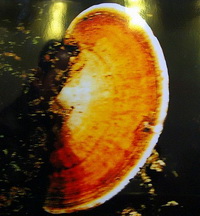 Botanical Description: Ganoderma multiplicatum (Mont.) Pat. is a fungus in the family Ganodermataceae (formerly placed in Polyporaceae) and genus Ganoderma. It is commonly known as Yellow Ganoderma or Huang Lingzhi (meaning “Yellow Lingzhi”). The basidiocarp (fruiting body) is annual and sessile, suberose to lignified. The pileus (cap) is rimose (cracked), orbicular to subrotund, measuring 9 × 12 cm. Its surface exhibits alternating broad brown and khaki concentric rings and annuli, with a faint lacquer-like luster. The margin is undulate and obtuse. Context thickness is approximately 0.5 cm: the upper layer is fawn-colored (flavotestaceous); the lower layer is darker—brown or bistre (seal brown). The tubes are brown and approximately 0.9 cm long; the pore surface is brown; the pores are slightly rounded, with tube walls moderately thickened, 4–5 per mm. Although sessile, a very short stipe base is present at the junction of the pileus and substrate.
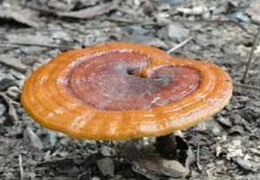 The hymenium is an irregular sporiferous layer. Generative hyphae are hazel (pale brown); the tips are typically unenlarged, variable in length, not aligned horizontally, and aggregated in tufts; length: 10–22.5 μm (commonly 15 μm), width: 4–5 μm. The basal portion of the hyphae is embedded and concealed within black gelatinous (colloidal) substances.
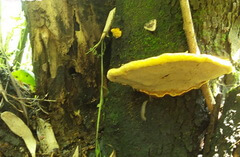 Ecological Environment: Ganoderma multiplicatum (Mont.) Pat. grows on the bases of larch trunks. This species is distributed in Angola, Brazil, China, the Democratic Republic of the Congo (formerly Zaire), and Zambia. In traditional use, it is believed to strengthen the Spleen and alleviate symptoms including weight loss, night sweats, anorexia, frequent hiccups, shortness of breath, lethargy, loose stools or diarrhea, and diminished resistance. It has been traditionally applied in supportive care for lung cancer, liver cancer, gastric cancer, and pancreatic cancer.
