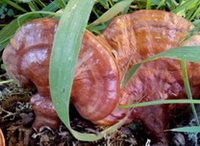
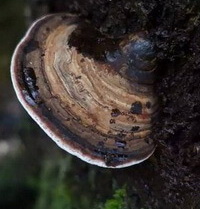
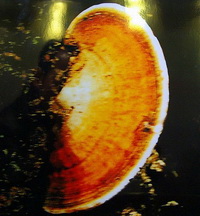
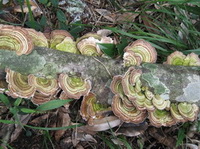
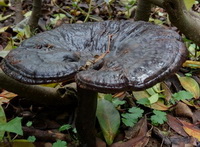
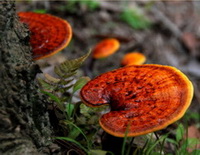
✵This article documents other cultivated species of the Lingzhi mushroom, including their English names, Latin names, Pinyin names, properties and flavors. It provides a detailed introduction to the botanical characteristics, growth habits, and ecological requirements of these cultivated Ganoderma species, as well as their morphological features, pharmacological actions, medicinal efficacies, and administration guidelines.
Lingzhi Mushroom: Other Cultivated Species
There are approximately 250 fungal species in the genus Ganoderma. In China, about 98–100 species belonging to the genus Ganoderma (family Ganodermataceae) have been identified; they are distributed from south to north.
Among the ~98–100 Ganoderma species recorded in China, more than a dozen are already in use, including: Ganoderma lucidum, Ganoderma tsugae, Ganoderma boninense, Ganoderma calidophilum, Ganoderma hainanense, Ganoderma mongolicum, Ganoderma resinaceum, Ganoderma tenue, Ganoderma sinense, Ganoderma valesiacum, Ganoderma ahmadii, Ganoderma capense, Ganoderma tropicum, Ganoderma duropora, Ganoderma applanatum, Ganoderma gibbosum, and Ganoderma lobatum. Among these, some are commercially cultivated, some are used in fermentation processes, and others serve as model organisms in laboratory research.
There are approximately 250 fungal species in the genus Ganoderma. In China, about 98–100 species belonging to the genus Ganoderma (family Ganodermataceae) have been identified; they are distributed from south to north.
The medicinal values of Ganoderma fungi are documented in classical herbal works. Three Ganoderma species are officially recognized in authoritative herbal compendia for therapeutic use: (1) Ganoderma lucidum, also known as Lingzhi (Línɡ Zhī) or Chìzhī (Chì Zhī), literally “Red Lingzhi Mushroom”; (2) Ganoderma sinense, also known as Zǐzhī (Zǐ Zhī), literally “Purple Lingzhi Mushroom”; and (3) Ganoderma tsugae, also known as Sōngzhī (Sōng Zhī), literally “Pine Lingzhi Mushroom.” These three widely used species are introduced in:Introduction of Ling Zhi: Ganoderma lucidum, Fairy Grass. more
In addition to the species defined in classical herbal works—namely (1) Ganoderma lucidum (Leyss. ex Fr.) Karst. and (2) Ganoderma sinense Zhao, Xu et Zhang—and the cultivated Ganoderma species, including (3) Ganoderma tsugae, (4) Ganoderma hainanense, (5) Ganoderma multiplex, (6) Ganoderma tenue, and (7) Ganoderma atrum, several other wild Ganoderma species are also recognized for potential use. These include: (9) Ganoderma boninense, (10) Ganoderma calidophilum, (11) Ganoderma monglicum, (12) Ganoderma resinaceum, (13) Ganoderma valesiacum, (14) Ganoderma ahmadii, (15) Ganoderma capense, (16) Ganoderma tropicum, (17) Ganoderma duropora, (18) Ganoderma applanatum, (19) Ganoderma gibbosum, and (20) Ganoderma lobatum. These usable wild species are introduced in:Lingzhi Mushroom: Other Identified Common Species. more
Other Identified Special Species of Lingzhi Mushroom: Except for the species defined in classical herbal works, cultivated Ganoderma species, and other identified wild Lingzhi mushroom species commonly used in practice, there remain additional identified special (wild) species that are not commonly utilized. These special wild species are listed below:(21) Ganoderma curtisii, (22) Ganoderma daiqingshanense, (23) Ganoderma flexipes, (24) Ganoderma kunmingense, (25) Ganoderma ramosissimum, (26) Ganoderma rotundatum, (27) Ganoderma sichuanense, (28) Ganoderma submucronatum, (29) Ganoderma theaecolum, (30) Ganoderma amboinense, (31) Ganoderma austrofujianense, (32) Ganoderma cochlear, (33) Ganoderma crebrostriatum, (34) Ganoderma dahlii, (35) Ganoderma fornicatum, (36) Ganoderma fulvellum, (37) Ganoderma guinanense, (38) Ganoderma luteomarginatum, (39) Ganoderma magniporum, (40) Ganoderma mastoporum, (41) Ganoderma mediosinense, (42) Ganoderma mirivelutinum, (43) Ganoderma ochrolaccatum, (44) Ganoderma parviungulatum, (45) Ganoderma simaoense, (46) Ganoderma tibeticum, (47) Ganoderma chenghaiense, (48) Ganoderma tsunodae, (49) Ganoderma formosanum, (50) Ganoderma multiplex, (51) Ganoderma australe, (52) Ganoderma sanmingense, (53) Ganoderma annulatum, (54) Ganoderma bawanglingense, (55) Ganoderma brownii, (56) Ganoderma aensitonatum, (57) Ganoderma diaoluoshanense,
(58) Ganoderma limushanense, (59) Ganoderma meijiangense, (60) Ganoderma philippii, (61) Ganoderma shangsiense, (62) Ganoderma triangulatum, (63) Ganoderma nugatum, (64) Ganoderma koningsbergii. These special wild species are introduced in: “Lingzhi Mushroom: Other Identified Special Species.” more
References:
1. Introduction of Ling Zhi: Ganoderma lucidum, Fairy Grass.

 ✵This article documents other cultivated species of the Lingzhi mushroom, including their English names, Latin names, Pinyin names, properties and flavors. It provides a detailed introduction to the botanical characteristics, growth habits, and ecological requirements of these cultivated Ganoderma species, as well as their morphological features, pharmacological actions, medicinal efficacies, and administration guidelines.
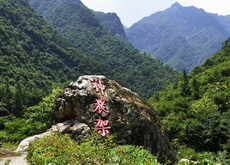 Among the ~98–100 Ganoderma species recorded in China, more than a dozen are already in use, including: Ganoderma lucidum, Ganoderma tsugae, Ganoderma boninense, Ganoderma calidophilum, Ganoderma hainanense, Ganoderma mongolicum, Ganoderma resinaceum, Ganoderma tenue, Ganoderma sinense, Ganoderma valesiacum, Ganoderma ahmadii, Ganoderma capense, Ganoderma tropicum, Ganoderma duropora, Ganoderma applanatum, Ganoderma gibbosum, and Ganoderma lobatum. Among these, some are commercially cultivated, some are used in fermentation processes, and others serve as model organisms in laboratory research.