✵The article records the herb Blackberry, including its English name, Latin name, Pinyin name, common names, property and flavor, botanical source—namely two plant species: (1) Rubus fruticosus L. and (2) Rubus villosus Ait.—and a detailed introduction to the botanical features, growth characteristics, and ecological environment of these species; as well as the features of the herb Blackberry, its pharmacological actions, medicinal efficacy, and administration guidelines.
Blackberry (American Blackberry)
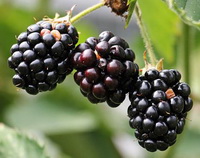
English Name: Blackberry
Latin Name:Rubus fruticosus L. (European blackberry), Rubus villosus Ait. (American blackberry), and various other Rubus species
Pinyin Name: Hēi Méi
Common Names: Bramble, dewberry, goutberry, american blackberry, high blackberry, thimbleberry, rubus, bramble leaf
Property and Flavor: Cool in nature, sweet and sour in taste
Brief Introduction: Virtually all parts of this prickly, vigorous flowering shrub—from the dried root bark and palmately compound leaves to the juicy blue-black berries—have been used medicinally. Blackberry belongs to the Rosaceae family, the same botanical family as strawberries and roses, and grows wild across much of North America.
Blackberry cultivation has a long history. Since Ancient Greece, local people have gathered wild thorny blackberries for consumption. By the mid-17th century, Europeans began domesticating and selecting improved varieties of wild blackberries; in the 19th century, cultivated varieties were introduced from the United States to the Pacific region. Blackberry is one of the four major small fruit crops widely cultivated in North America and Europe. Fresh fruits and their products are highly nutritious, most are vivid in color and pleasant in flavor, and possess a distinctive, pleasant fragrance; many also exhibit unique bioactive properties.
Botanical Source: Common herbal classics define the herb Blackberry as the fruit of (1) Rubus fruticosus L. or (2) Rubus villosus Ait. These are species of the genus Rubus, family Rosaceae (rose family). Medicinally used parts include the leaves, roots or root bark, and ripe berries. The two commonly used species are described below:
(1) Rubus fruticosus L.
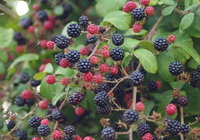
Botanical Description:Rubus fruticosus is a perennial, broad-leaved, woody shrub of the genus Rubus and family Rosaceae. It possesses a perennial root system and biennial canes. Plants may reach 2 meters or more in height, though leaf shape and overall habit vary considerably. Stems are variable—semi-erect canes up to 8–10 meters long. Canes range in color from green to red or purplish, bear backward-pointing thorns, are moderately pubescent, and may be round or angled; some bear small, stalked glands. Tip-layering occurs when cane tips contact soil and form adventitious roots, giving rise to new plants; new canes emerge annually from the base.
Roots are stout, branched, and creeping underground. They descend vertically to a maximum depth of 1.5 meters—depending on soil type—from a woody crown up to 20 cm in diameter. Secondary roots extend horizontally from the crown for 30–60 cm before turning downward. Numerous fine lateral roots branch in all directions from these secondary roots.
Leaves are alternate, short-petiolate, and palmately divided into three or five serrated, oval leaflets, dark green adaxially and pale abaxially.
Flowers are 2–3 cm in diameter, white to pink, with five petals and numerous stamens, borne in many-flowered corymbs. In the Northern Hemisphere, flowering occurs from May to August; in the Southern Hemisphere, from November to April.
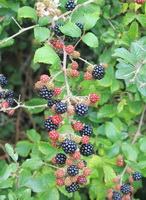
The fruit is an aggregate fruit (an aggregate of drupelets), 10–20 mm long, ripening from green → red → black. It comprises approximately 20–50 single-seeded drupelets. Seeds are deeply and irregularly pitted, oval, light to dark brown, 2.6–3.7 mm long and 1.6–2.5 mm wide.
Ecological Environment:Rubus fruticosus is native to the north temperate zones of both the Old and New Worlds—particularly eastern North America and the Pacific coast. It is a common understory shrub and hedgerow plant in the British Isles and Western Europe. In some regions—including New Zealand and the Pacific Northwest of the United States—it has become naturalized and is classified as an invasive alien species and noxious weed. According to available data, approximately 30,000 hectares are under cultivation in the United States and 20,000 hectares in Chile. Rubus fruticosus is grown commercially in many countries across North America, Oceania, South America, Asia, and other regions.
(2) Rubus villosus Ait.
Botanical Description:Rubus villosus Ait. is synonymous with Rubus allegheniensis Porter; R. allegheniensis Porter is a deciduous shrub of the genus Rubus and the family Rosaceae (rose family). It is also known as Allegheny blackberry or common blackberry. It is an upright bramble, typically growing up to 1.5 meters tall but occasionally exceeding 2.4 meters in height; individual shrubs may reach up to 2.4 meters in breadth, although the species usually forms dense thickets comprising many plants. Leaves are alternate, compound, ovoid, and have serrated margins.
White flowers are showy, about 2 cm across, with five petals. The fruit is a globose to elongate aggregate of druplets, 1–2.5 cm long and 1.5–2.5 cm wide, purple-black in color. The fruit does not detach from the receptacle when removed from the stalk.
Ecological Environment:Rubus villosus Ait. is native to eastern North America, ranging south throughout most of the eastern United States and west to Nebraska, Kansas, Oklahoma, and California.
Growth Characteristics:Rubus villosus Ait. can grow in partial shade (e.g., light woodland) or full sun. It prefers moist soil and tolerates mildly acidic, neutral, and slightly alkaline soils. It thrives in sandy, loamy, and clay soils, provided they are well-drained. The species is hermaphroditic and is pollinated by insects.
Characters of herbs: Blackberry root consists of the underground parts of Rubus fruticosus L. (or related Rubus species) and its preparations. Blackberry leaf consists of the dried, fermented, or unfermented leaves harvested during the flowering period of Rubus fruticosus L. and its preparations.
Medicinal Efficacy: In ancient and medieval Europe, blackberry was traditionally used to treat diarrhea, dropsy (fluid retention and swelling), gout, and bleeding wounds. Contemporary herbalists recommend it for simple diarrhea and mild inflammation or infections of the mouth or throat. However, blackberry is widely used as a food and beverage flavoring.
In Europe, blackberry root is used in folk medicine as a prophylactic for dropsy and for gastrointestinal conditions; blackberry leaf is approved for the treatment of diarrhea and inflammation of the mouth and pharynx. It is indicated for nonspecific acute diarrhea and mild inflammation of the oral and pharyngeal mucosa.
Administration of Blackberry (American Blackberry):
Reference:
Administration Guide for Blackberry (American Blackberry)
Herbal classic works:
n infusion is prepared using 1–2 teaspoons of chopped leaves per cup of water and taken up to six times daily. A decoction is prepared using 1–2 teaspoons of powdered bark per cup of water. Root tea is also used as an astringent for diarrhea, at a dosage of 1,500 mg up to three times daily. A tincture is recommended at dosages of up to 2 mL daily. In Europe, blackberry leaf is recommended at 2–5 grams per day; a tea is prepared using 1.5 grams of herb steeped for 10–15 minutes, then strained.
Contraindications, Precautions, and Adverse Reactions: No evidence indicates that medicinal doses of blackberry are hazardous; however, caution is advised when consuming large amounts of any tannin-rich plant due to unresolved concerns regarding potential carcinogenicity. Avoid large quantities of blackberry tea if you have chronic gastric or intestinal disorders.

 ✵The article records the herb Blackberry, including its English name, Latin name, Pinyin name, common names, property and flavor, botanical source—namely two plant species: (1) Rubus fruticosus L. and (2) Rubus villosus Ait.—and a detailed introduction to the botanical features, growth characteristics, and ecological environment of these species; as well as the features of the herb Blackberry, its pharmacological actions, medicinal efficacy, and administration guidelines.
 English Name: Blackberry
 Botanical Description: Rubus fruticosus is a perennial, broad-leaved, woody shrub of the genus Rubus and family Rosaceae. It possesses a perennial root system and biennial canes. Plants may reach 2 meters or more in height, though leaf shape and overall habit vary considerably. Stems are variable—semi-erect canes up to 8–10 meters long. Canes range in color from green to red or purplish, bear backward-pointing thorns, are moderately pubescent, and may be round or angled; some bear small, stalked glands. Tip-layering occurs when cane tips contact soil and form adventitious roots, giving rise to new plants; new canes emerge annually from the base.
 Ecological Environment: Rubus fruticosus is native to the north temperate zones of both the Old and New Worlds—particularly eastern North America and the Pacific coast. It is a common understory shrub and hedgerow plant in the British Isles and Western Europe. In some regions—including New Zealand and the Pacific Northwest of the United States—it has become naturalized and is classified as an invasive alien species and noxious weed. According to available data, approximately 30,000 hectares are under cultivation in the United States and 20,000 hectares in Chile. Rubus fruticosus is grown commercially in many countries across North America, Oceania, South America, Asia, and other regions.
