Introduction of Bitter Orange:seville orange or sour orange.
✵The article records the herb Bitter Orange, including its English name, Latin name, Pinyin name, common names, property and flavor, botanical source—namely one plant species, (1) Citrus aurantium L.—and a detailed introduction to the botanical features, growth characteristics, and ecological environment of this species; as well as the features of the herb Bitter Orange, its pharmacological actions, medicinal efficacy, and administration guidelines.
Bitter Orange (Seville orange, sour orange)
English Name: Bitter Orange
Latin Name:Citrus aurantium L. Pinyin Name: Suān Chéng, Zhǐ Ké
Common Names Seville orange, sour orange, immature bitter orange
Property and Flavor: The herb is cold in nature, bitter and pungent in taste.
Brief Introduction:Citrus aurantium is an evergreen tree that bears scented flowers and very bitter, sour fruit. It is native to China and cultivated in many parts of the world, including North America. The part most commonly used medicinally is the carefully dried, spicy, bitter-tasting fruit peel, with the spongy inner white portion removed. An oil known as bitter orange oil is pressed from the fresh peel; the oil extracted from the blossoms is referred to as neroli oil or orange flower oil. The oil specially treated with distilled water is called orange flower water. The plant’s leaves have reportedly been used as well.
Botanical Source: Common herbal classics define the herb Bitter Orange as the immature fruit of (1) Citrus aurantium L. and several other species. It is a species of the genus Citrus L., family Rutaceae (the rue family). The immature fruit is used medicinally; the flowers and oil are also used. This commonly used species is described below:
(1) Citrus aurantium L.
Botanical Description:Citrus aurantium is a small evergreen tree with dense branches and leaves. The branches are triangular and bear numerous thorns, some reaching up to 8 cm in length on older branches. The leaves are alternate, dark green in color, and coriaceous in texture. Leaf petioles bear narrow or narrowly inverted cordate leaf wings, 8–15 mm long and 3–6 mm wide. The leaf blades are obovate or oval, 3.5–10 cm long and 1.5–5 cm wide; the apex is short and blunt, tapering or slightly concave; the base is cuneate or rounded; the margin is entire or slightly undulate, with translucent oil glands.
Flowers are solitary or clustered in the leaf axils and at the tips of current-year branches; they are white and fragrant. The calyx is cyathiform (cup-shaped) and 5-lobed. There are 5 oblong petals. Stamens number over 20. The ovary is superior; the pistil is shorter than the stamens, and the stigma is capitate.
The fruit is round or oblate; the peel is moderately to very thick and difficult to detach. When mature, it is orange-yellow; oil gland size is uneven. The fruit core is solid or semi-full, containing 10–13 segments. The pulp is sour, sometimes bitter or possessing a distinctive aroma. Seeds are numerous and large, often ribbed; cotyledons are milky white, with either single or multiple embryos. Flowering occurs from April to May; fruiting from June to November.
Ecological Environment:Citrus aurantium is mainly distributed in China, Southeast Asia, South Asia, and the United States. The annual average temperature should exceed 15 °C (59 °F); the effective germination temperature should be above 10 °C (50 °F); the optimal growth temperature range is 20–25 °C (68–77 °F). It can survive safely at temperatures above −5 °C (23 °F), with a minimum tolerance of −9 °C (15.8 °F) and a maximum of 40 °C (104 °F).
Growth Characteristics:Citrus aurantium prefers warm, humid climatic conditions with abundant rainfall and sunshine. It generally grows well at an average annual temperature above 15 °C (59 °F). The plant exhibits wide adaptability to soil types: both red and yellow soils are suitable, though neutral sandy loam is ideal. Excessively clayey (sticky) soils are unsuitable for cultivation.
Characteristics of the Herb: The immature fruit of Citrus aurantium is hemispherical, spherical, or oval, with a diameter of 0.5–2.5 cm. The outer surface is dark green or dark brownish-green, with granular protrusions and wrinkles. At the apex, there are obvious styloid base marks; at the base, there are disc residues or carpopodium (fruit stalk) shedding marks. The fracture surface is smooth and slightly raised, gray-white in color, 3–7 mm thick, and scattered with one to two rows of sunken oil glands along the margin. It contains 7–12 segments (carpels) of pulp sacs, with a brownish-yellow central sac exhibiting a wheel-like pattern. The dried herb is hard in texture and has a fragrant aroma; it tastes bitter and slightly sour.
Pharmacological Actions: (1) stimulation of gastric juice secretion and appetite; (2) cholesterol-lowering effects; (3) antifungal activity against skin infections; (4) antibacterial activity; (5) anti-inflammatory effects; etc.
Medicinal Efficacy: Bitter orange peel has been traditionally used in China, the United States, and Europe to stimulate gastric juice secretion and promote appetite, aid digestion, relieve indigestion and flatulence, expel phlegm associated with cough and other respiratory congestion—and historically, even for cancer support (though such use lacks robust clinical evidence). In Europe, bitter orange peel is traditionally employed in folk medicine for loss of appetite and dyspeptic symptoms; it is approved by regulatory authorities (e.g., ESCOP, HMPC) for these indications. Bitter orange flowers and flower oil are used in folk medicine for gastric and nervous complaints, gout, sore throat, nervous tension, insomnia, and chronic bronchitis.
In TCM works, the herb Zhǐ Ké (immature fruit of Citrus aurantium) is recorded to regulate stagnant Qi and resolve food retention. It is indicated for abdominal distension and fullness, epigastric or abdominal pain, constipation, diarrhea with dysentery and tenesmus, accumulation of pathogens in the chest, gastroptosis, uterine prolapse, and rectal prolapse.
Administration of Bitter Orange (Immature Bitter Orange):
Reference:
Administration Guide for Bitter Orange (Immature Bitter Orange)
Herbal classic books and TCM pharmacopoeias:
An infusion is prepared using 1 teaspoon of dried peel per cup (≈150 mL) of boiling water, steeped for 10 minutes before straining. The tincture is recommended at 20 drops three times daily. Orange flower water is administered in tablespoonful doses (≈15 mL). In Europe, the recommended daily dose of dried bitter orange peel is 4–6 grams, or one cup of tea taken half an hour before meals; tincture dosage is 2–3 grams daily. In TCM practice, the herb is administered internally as a water decoction (3–10 grams per day), or processed into pills or powders. Externally, an appropriate amount may be ground into a fine powder and applied topically—or heated and used for moxibustion-like fomentation.
Contraindications, Precautions, and Adverse Reactions: Bitter orange peel and its preparations are generally considered safe when used within recommended dosages; no serious adverse reactions have been consistently reported. However, due to its furocoumarin content—a photosensitizing compound—users (especially those with fair skin) may develop photodermatitis upon sun exposure after ingestion. The herb should be avoided in individuals with gastric or duodenal ulcers. Severe adverse reactions—including intestinal colic, convulsions, and fatalities—have been reported in children following ingestion of large quantities of the fresh or dried peel. The essential oil may cause mild skin irritation; internal use of the undiluted essential oil is contraindicated. Prolonged or repeated contact with the herb or its volatile oil may lead to sensitization, resulting in erythema, edema, vesicles, pustules, dermatoses, crusting, and post-inflammatory hyperpigmentation. According to TCM contraindications, Zhǐ Ké is not recommended for pregnant women or for individuals with Spleen- and Stomach-Qi deficiency; caution is advised if use is clinically necessary.
References:
1.Introduction of Bitter Orange: Seville orange or sour orange.

 ✵The article records the herb Bitter Orange, including its English name, Latin name, Pinyin name, common names, property and flavor, botanical source—namely one plant species, (1) Citrus aurantium L.—and a detailed introduction to the botanical features, growth characteristics, and ecological environment of this species; as well as the features of the herb Bitter Orange, its pharmacological actions, medicinal efficacy, and administration guidelines.
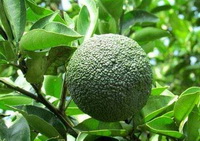 English Name: Bitter Orange
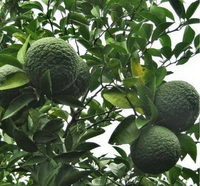 Botanical Description: Citrus aurantium is a small evergreen tree with dense branches and leaves. The branches are triangular and bear numerous thorns, some reaching up to 8 cm in length on older branches. The leaves are alternate, dark green in color, and coriaceous in texture. Leaf petioles bear narrow or narrowly inverted cordate leaf wings, 8–15 mm long and 3–6 mm wide. The leaf blades are obovate or oval, 3.5–10 cm long and 1.5–5 cm wide; the apex is short and blunt, tapering or slightly concave; the base is cuneate or rounded; the margin is entire or slightly undulate, with translucent oil glands.
