✵The article records the herb Black Cohosh, including its English name, Latin name, common names, synonyms, properties and flavor, botanical source—namely one plant species, (1) Cimicifuga racemosa L.—and a detailed introduction to the botanical features, growth characteristics, and ecological environment of this species; a brief historical overview; the characteristics of the herb Black Cohosh; its pharmacological actions; medicinal efficacy; and administration guidelines.
Black Cohosh (Actae cimicifuga)
English Name: Black Cohosh
Latin Name:Actaea cimicifuga L. or Cimicifuga racemosa (L.) Nutt.
Pinyin Name: Hēi Shēng Má, Zǒng Zhuàng Shēng Má
Common Names: Black snake root, bugbane, bugwort, rattle root, squaw root, black snakeroot, rattletop, cohosh
Synonyms:Cimicifuga racemosa (L.) Nutt.; Macrotys actaeoides; Botrophis serpentaria Raf.; Botrophis actaeoides Fisch. & C.A. Mey.; Thalictrum racemosum (Kl.) Kuntze Property and Flavor: The herb is slightly cold in nature and tastes pungent and sweet.
Brief Introduction: Contemporary uses of black cohosh are primarily directed toward alleviating menopausal symptoms, such as hot flashes, anxiety, and depression. From a modern scientific perspective, emerging research has yielded new findings and divergent interpretations regarding its applications—some of which are contradictory.
Botanical Source: Traditional herbal classics define Black Cohosh as the rhizomes and roots of (1) Cimicifuga racemosa L. It is a perennial herbaceous species of the genus Actaea (baneberry or bugbane), family Ranunculaceae (buttercup or crowfoot family). The rhizomes and roots are used medicinally in North America; both fresh and dried roots are employed in Europe. This widely used species is described below:
(1) Cimicifuga racemosa L.
Botanical Description:Actaea cimicifuga is synonymous with Cimicifuga racemosa. It is a perennial herb growing up to 1–1.5 meters—or occasionally 2 meters—in height. The rhizome is stout and firm, with a black surface bearing numerous sunken round pores and remnants of old stems. Stems are erect, branched in the upper portion, and pubescent. Leaves are bipinnate or tripinnate compound leaves, glabrous and crenate-serrate; petioles reach up to 15 cm in length. The terminal leaflet of lower stem leaves is long-stalked, rhombic (7–10 cm long × 4–7 cm wide), often three-lobed, with serrated margins; lateral leaflets are short-stalked or sessile, obliquely ovate, slightly smaller than the terminal leaflet, also serrated, glabrous on the upper surface, and sparsely white-pilose along the veins on the lower surface.
The raceme bears 3–20 branches and reaches up to 45 cm in length; the lowest branch is ~15 cm long. The inflorescence rachis is densely covered with grayish or rust-colored glandular hairs and pubescence. Bracts are subulate and shorter than the pedicels. Flowers are hermaphroditic: sepals number five, petaloid (petal-shaped), obovate-rounded, white or greenish-white, 3–4 mm long, and caducous; petals are absent. Stamens are numerous (4–7 mm long); staminodes are broadly elliptic (~3 mm long), with a slightly concave or bilobed apex. Carpels number 2–5, sessile or extremely short-stalked, densely gray-pilose. Follicles are ellipsoid (8–14 mm long × 2.5–5 mm wide), densely appressed-pilose, grow on stalks 2–3 mm long, and tipped with a short rostrum (beak). Seeds are ovoid, brown, 2.5–3 mm long, surrounded by membranous scales and wing-like appendages. Flowering occurs from July to September; fruiting from August to October.
Ecological Environment:Actaea cimicifuga is native to eastern North America. It grows naturally in forests, forest edges, and roadside grasslands at elevations of 1,700–2,300 meters above sea level. It is also cultivated in parts of Europe and other temperate regions of the Northern Hemisphere—but not in China (the species is not native nor naturalized there).
Growth Characteristics:Actaea cimicifuga prefers a warm, humid climate and is cold-tolerant; seedlings can survive winter temperatures as low as −25 °C (−13 °F). During the seedling stage, plants are sensitive to direct sunlight; during flowering and fruiting, they require ample light. It is intolerant of waterlogging and drought; it thrives best in slightly acidic to neutral, humus-rich soils. Growth is poor in alkaline or heavy clay soils.
Currently, large-scale cultivation of black cohosh remains limited, although the plant is relatively easy to cultivate. Its increasing popularity among consumers suggests that commercial cultivation represents a critical next step.
Brief History of Black cohosh: The genus Actaea comprises 15 species of upright perennial plants distributed across the northern temperate zone. Actaea racemosa, commonly called black cohosh, is native to eastern North America. It is a wildflower historically cultivated as an ornamental; its flowers are pollinated by flesh flies (Sarcophagidae).
In modern botanical history, the plant was first described by Plukenet [1] in 1696; Linnaeus [2] later classified it as Actaea racemosa. By 1732, it had been introduced into English gardens as a hardy ornamental perennial. To this day, it remains more widely grown in European gardens than in North America. The rhizome—and not merely “the root”—is the part used in herbal traditions. Most material is wild-harvested, though some is cultivated commercially in Europe.
The genus Cimicifuga comprises 23 temperate-climate species: six from North America, one from Europe, and the remainder from temperate eastern Asia. Several Asian species—similar to black cohosh—are traditionally used for gynecological conditions. Collectively, they are commonly known as bugbanes, a name primarily referencing the single native European species, Cimicifuga europaea, and the Asian representative Cimicifuga foetida, both of which possess strongly odoriferous herbage—hence their reputation as insect-repelling plants. The genus name Cimicifuga itself reflects this olfactory trait: derived from the Latin cimex, meaning “bug” (specifically the bed bug Cimex lectularius), and fugare, meaning “to drive away,” alluding to its insect-repellent properties. These species are also known as bugwort or bugbane and have been used independently as insect repellents across their extensive range—from South Asia to Western Europe and eastern Siberia.
Native Americans used the rhizome of black cohosh to treat various ailments, including kidney disorders, sore throat, malaria, rheumatism, and gynecological conditions such as menstrual irregularity. Black cohosh and blue cohosh (Caulophyllum thalictroides) were among the most favored herbs for gynecological complaints among Native American peoples—just as dong quai (Angelica sinensis) and licorice (Glycyrrhiza uralensis) have been traditionally favored for women’s health in China and other parts of East Asia.
Characteristics of the Herb: The medicinally used part consists of the dried rhizome of Cimicifuga racemosa, with attached roots. The rhizome of Actaea cimicifuga is irregularly elongated and branched, measuring 3–17 cm in length and 1.7–4 cm in diameter. Its surface is dark brown and extremely rough, bearing numerous circular, stem-scar depressions (0.8–2.5 cm in diameter and 1–2 cm in height), with rough inner walls and shallow cavities. Numerous fibrous root remnants persist at the lower portion. The rhizome is tough and difficult to break; its transverse section is uneven, with a yellowish-green, radially arranged xylem (wood) and a slightly flattened, grayish-green, somewhat powdery pith. The herb has a faint odor and a bitter taste.
Pharmacological Actions: (1) alleviation of menopause-related nervousness; (2) reduction of luteinizing hormone levels; (3) estrogen-like activity; (4) antidepressant effect; (5) anti-inflammatory effect, etc.
Medicinal Efficacy: Black cohosh was traditionally used by Native Americans to treat ailments including sore throat, bronchitis, indigestion, rheumatism, and snakebites—but primarily to relieve gynecological discomforts such as dysmenorrhea. In the nineteenth century, it was widely employed as a “lady’s remedy” for menstrual cramps. Contemporary herbalists recommend black cohosh as a diuretic and for persistent cough, mucus clearance from congested airways, menstrual regulation, and easing childbirth. It has been approved in Europe for climacteric complaints and premenstrual syndrome (PMS). In folk medicine, it is used for rheumatism, sore throat, and bronchitis; its tincture serves as a sedative for choreiform states, fever, lumbago, and snakebites—as well as for depressive moods associated with premenstrual and menopausal symptoms. In Traditional Chinese Medicine (TCM), the herb is recorded as having properties to clear heat and detoxify, release the exterior and promote eruption, and elevate Yang Qi. It is indicated for epidemic toxins and fire poison, oral ulcers, sore throat, maculopapular rashes, alternating chills and fever, carbuncle swelling, sores, spleen-Qi collapse, spleen-deficiency diarrhea, chronic dysentery with tenesmus, pathological leukorrhea, metrorrhagia, etc.
Administration of Black Cohosh (Actae cimicifuga):
Reference:
Administration Guide for Black Cohosh (Actaea cimicifuga)
Herbal classic books and TCM works:
In North America, the herb is recommended at a typical daily dosage of 40 to 200 mg. A decoction is prepared using half a teaspoon of powdered root per cup of water; 2 tablespoons are taken every few hours, up to 1 cup per day. The tincture is taken in doses of up to 1 teaspoon per day. In TCM works, the herb is recommended for internal use as a water decoction: 3–6 grams to elevate Yang, or up to 15 grams to clear heat and detoxify; it may also be prepared into pills or powder. For external use, apply an appropriate amount of finely ground powder—either mixed with a suitable medium, used as a mouthwash (as a water decoction), or applied via drip-washing.
Contraindications, Precautions, and Adverse Reactions: The FDA issued a warning regarding possible side effects of black cohosh in 1986 and declined to classify the herb as a safe food ingredient. Herbalists caution that black cohosh is contraindicated in women with estrogen-dependent cancers, women taking birth control pills or estrogen supplements postmenopause, individuals with certain types of heart disease, and those taking sedatives or antihypertensive medications. Reported adverse effects from large doses include nausea, vomiting, stomach upset, and miscarriage. Consult a qualified herbalist before using black cohosh. Long-term use (beyond six months) is not advised due to insufficient data on its long-term safety. Black cohosh is contraindicated during pregnancy and lactation. It should be avoided by individuals allergic to black cohosh or other members of the Ranunculaceae family (e.g., buttercup or crowfoot family); use cautiously in individuals with aspirin or salicylate sensitivity. According to TCM works, the herb is contraindicated in syndromes such as floating Yang due to Yin deficiency, dyspneal fullness, rebellious Qi, or erupting measles. Overdose may cause dizziness, tremors, and limb spasms.
Explanatory Notes:
1. Plukenet: Leonard Plukenet (1642–1706), English botanist and royal gardener to Queen Mary II, author of the illustrated work Phytographia.
2. Linnaeus: Carolus Linnaeus (1707–1778), Swedish botanist, author of Systema Naturae, Genera Plantarum, Species Plantarum, and Fundamenta Botanica.

 ✵The article records the herb Black Cohosh, including its English name, Latin name, common names, synonyms, properties and flavor, botanical source—namely one plant species, (1) Cimicifuga racemosa L.—and a detailed introduction to the botanical features, growth characteristics, and ecological environment of this species; a brief historical overview; the characteristics of the herb Black Cohosh; its pharmacological actions; medicinal efficacy; and administration guidelines.
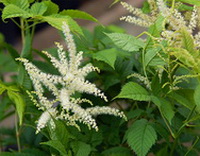 English Name: Black Cohosh
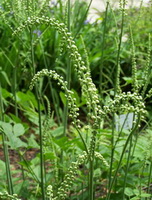 Botanical Description: Actaea cimicifuga is synonymous with Cimicifuga racemosa. It is a perennial herb growing up to 1–1.5 meters—or occasionally 2 meters—in height. The rhizome is stout and firm, with a black surface bearing numerous sunken round pores and remnants of old stems. Stems are erect, branched in the upper portion, and pubescent. Leaves are bipinnate or tripinnate compound leaves, glabrous and crenate-serrate; petioles reach up to 15 cm in length. The terminal leaflet of lower stem leaves is long-stalked, rhombic (7–10 cm long × 4–7 cm wide), often three-lobed, with serrated margins; lateral leaflets are short-stalked or sessile, obliquely ovate, slightly smaller than the terminal leaflet, also serrated, glabrous on the upper surface, and sparsely white-pilose along the veins on the lower surface.
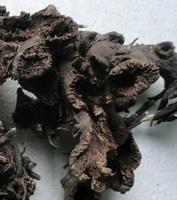 Characteristics of the Herb: The medicinally used part consists of the dried rhizome of Cimicifuga racemosa, with attached roots. The rhizome of Actaea cimicifuga is irregularly elongated and branched, measuring 3–17 cm in length and 1.7–4 cm in diameter. Its surface is dark brown and extremely rough, bearing numerous circular, stem-scar depressions (0.8–2.5 cm in diameter and 1–2 cm in height), with rough inner walls and shallow cavities. Numerous fibrous root remnants persist at the lower portion. The rhizome is tough and difficult to break; its transverse section is uneven, with a yellowish-green, radially arranged xylem (wood) and a slightly flattened, grayish-green, somewhat powdery pith. The herb has a faint odor and a bitter taste.
