✵This article documents Beta-Carotene—including its English name, common names, botanical source plant species, detailed botanical characteristics of those species, pharmacological actions, medicinal efficacy, and administration guidelines.
Beta-Carotene (Carotenoid, provitamin A)
English Name: Beta-Carotene
Latin Name: —
Pinyin Name: Bèi Tā Hú Luó Bo Sù, Lèi Hú Luó Bo Sù
Common Names: Carotenoid, provitamin A
Property and Flavor: —
Brief Introduction: Beta-carotene is a precursor of vitamin A and is converted into active vitamin A in the body. Since ancient times, humans have obtained beta-carotene from dietary sources. Carrots, broccoli, leafy green vegetables, squash, and cantaloupe are among the richest natural sources.
The richest sources of beta-carotene are green leafy vegetables and yellow or orange fruits, such as carrots, spinach, lettuce, sweet potatoes, broccoli, cantaloupe, and winter squash. Beta-carotene—whose name derives from the Latin word for carrot (carota)—is an orange, fat-soluble compound and a precursor of vitamin A. It is abundant in plants and imparts vibrant color to fruits and vegetables. Beta-carotene is widely used in common foods and health products due to its coloring, antioxidant, and nutritional fortification properties. As a food additive and nutritional fortifier, beta-carotene has been evaluated and approved by the Joint FAO/WHO Expert Committee on Food Additives (JECFA). It is recognized as a Class A nutrient pigment and has been approved for use in 52 countries and regions worldwide.
Botanical Source: The best dietary sources of beta-carotene include carrots, dark green leafy vegetables (e.g., spinach), sweet potatoes, broccoli, cantaloupe, and winter squash. Ordinary cooking does not significantly degrade beta-carotene. The following plant species are described below:
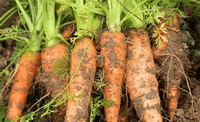
(1) Carrot.
Botanical Description:Daucus carota L. is a biennial herb of the genus Daucus and family Apiaceae (Umbelliferae, the parsley family). It grows 15–120 cm tall. Stems are solitary and covered with white bristles. Basal leaves are membranous, oblong, and pinnately divided two or three times; ultimate lobes are linear or lanceolate, 2–15 mm long and 0.5–4 mm wide, with acute tips and surfaces that are glabrous or hirsute. Petioles are 3–12 cm long. Stem leaves are subsessile, sheathing, and bear small or slender terminal lobes.
The inflorescence is a compound umbel; peduncles are 10–55 cm long and hirsute. The involucre comprises numerous leaf-like bracts, pinnately divided (rarely entire), with linear lobes 3–30 mm long. Umbel rays are numerous (2–7.5 cm long), often reflexed inward at the periphery. There are 5–7 bracteoles—linear, entire or 2–3-lobed—with membranous, ciliate margins. Flowers are usually white, occasionally reddish; pedicels are unequal in length (3–10 mm). The fruit is ovoid, 3–4 mm long and 2 mm wide, with white bristles along the ribs. Flowering occurs from May to July.
Carrots originated in Southwest Asia, with Afghanistan as the center of earliest domestication over 2,000 years ago. They were introduced to Europe from Iran in the 10th century CE, appeared in Britain by the 15th century, and diversified into European ecotypes—especially along the Mediterranean coast. Carrots reached the Americas in the 16th century. They were introduced to China from Iran in the 13th century, giving rise to distinct Chinese ecotypes, and subsequently spread to other parts of East Asia from China in the 16th century.
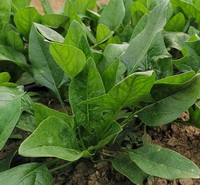
(2) Spinach
Botanical Description:Spinacia oleracea L. is an annual or biennial plant of the genus Spinacia and family Chenopodiaceae (goosefoot family), and one of the most widely cultivated leafy vegetables. Plants grow up to 1 m tall and lack epicuticular wax (“without powder”). Roots are conical and reddish (sometimes white). Stems are erect, hollow, succulent, fragile, unbranched or sparsely branched. Leaves are halberd-shaped to ovate, bright green, tender and juicy, slightly glossy, and either entire or with a few tooth-like lobes. Male flowers are aggregated into globose cymes, arranged in interrupted spike-like panicles at the upper stem and branch nodes; tepals are usually 4; filaments are thread-like and flattened; anthers lack appendages. Female flowers occur in leaf axils; bracteoles are laterally compressed, with 2 denticles at the apex and usually 1 spinous appendage on the dorsal surface; the ovary is spherical, with 4–5 exserted stigmas. The fruit is ovoid to suborbicular, ~2.5 mm in diameter, laterally compressed; the pericarp is brown.
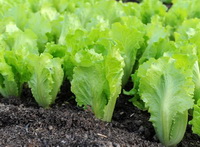
(3) Lettuce.
Botanical Description: Lettuce (Lactuca spp.) comprises annual or biennial herbs of the genus Lactuca and family Asteraceae (formerly Compositae). Cultivated forms—including romaine lettuce (Lactuca sativa var. longifolia), crisphead (cabbage) lettuce (Lactuca sativa var. capitata), and loose-leaf types—are all rich in beta-carotene. Romaine lettuce grows up to 1 m tall. Stems are erect and solitary; the upper inflorescence is branched. All stems and branches are glabrous. Leaves are linear to linear-lanceolate, gradually acuminate at the apex, with entire margins and arrow-shaped, semi-clasping bases. Lower and basal leaves are larger; upper leaves become progressively smaller. Both leaf surfaces are glabrous. Lettuce is native to the Mediterranean region. It was first cultivated and consumed by ancient Greeks and Romans. Lettuce has been grown in China for centuries, and its cultivation area has expanded rapidly.
Its leaves are long and obovate, densely arranged into cabbage-shaped rosettes, which can be eaten raw—crisp, refreshing, and slightly sweet. The stem is upright and solitary; the upper part is panicle-branched, and all stems and branches are white. Basal leaves and lower stem leaves are large, undivided, oblanceolate, elliptic, or elliptic-oblanceolate, 6–15 cm long and 1.5–6.5 cm wide, with acute, short-acuminate, or rounded apices; they are sessile, with cordate or arrow-shaped, semi-clasping bases; margins are wavy or serrate; laminae taper upward and are lanceolate in shape.
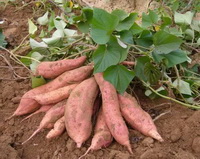
(4) Sweet potato.
Botanical Description:Dioscorea esculenta (Lour.) Burkill is a herbaceous, twining vine of the genus Dioscorea L. (family Dioscoreaceae, the yam family). The distal end of the underground tuber expands into an ovoid tuber with a pale yellow, smooth outer skin. Stems are left-handed, bearing spines at the base and covered with T-shaped hairs. Leaves are alternate and broadly cordate. Male inflorescences are solitary spikes; male flowers are sessile or borne on very short pedicels. Bracts are ovate with acuminate apices. Flowers are shallowly cyathiform (cotyloid) and pubescent. The capsule is triangular, slightly concave at the apex and truncate at the base, with each angle bearing a wing-like ridge. Seeds are orbicular and winged. Flowering occurs in early summer. Sweet potato is a light-loving, short-day crop that is thermophilic, not cold-tolerant, and moderately drought-tolerant. It is mainly distributed south of 40°N latitude and is cultivated primarily in Asia, Africa, and the Americas.
(5) Broccoli.
Botanical Description:Brassica oleracea L. var. italica Planch., commonly known as broccoli, is a plant of the genus Brassica and family Brassicaceae (Cruciferae, the mustard family). It originated in Italy along the Mediterranean coast of Europe and is now cultivated worldwide. Its leaves are large, and the apex of the main stem develops an enlarged inflorescence—commonly called a “head” or “curd”—which is green or purple-green. The small flower buds on the surface are not densely packed; each lateral branch terminates in a smaller inflorescence. Broccoli is a common vegetable. Its morphology and growth habits are broadly similar to those of cauliflower, but it exhibits greater vigor, heat tolerance, and cold tolerance. The plant is relatively tall. After producing over 20 leaves, it bolts, forming floral stems; compact, integrated clusters of unopened flower buds (turquoise in color) develop at the apex. Leaf color is bluish-green, gradually deepening to dark bluish-green, with increasing epicuticular wax. Petioles are long and narrow. Leaf shape varies between broad-leaf and narrow-leaf (lanceolate) types.
(6) Cantaloupe.
Botanical Description: Cantaloupe (Cucumis melo L.) is an annual trailing herb of the genus Cucumis and family Cucurbitaceae (the gourd or squash family). It possesses a well-developed root system: the primary root penetrates over 1 meter deep, and lateral roots extend 2–3 meters horizontally. However, its root regeneration capacity is weak, making it unsuitable for transplanting. Stems are round or angular, short-bristled, and highly branched. Leaves are alternate, suborbicular or reniform, and pilose. Flowers are axillary, unisexual (i.e., staminate and pistillate flowers occur separately on the same plant), entomophilous, and yellow. Fruit shapes include round, oval, spindle-shaped, and elongated cylindrical forms. The rind of mature fruit may be white, green, yellow, brown, or mottled with stripes and spots. The fruit surface is smooth, reticulate, furrowed, or occasionally cracked. The flesh is white, orange, green, or yellow, and aromatic. Seeds are lanceolate or oblate, varying in size. Cantaloupe is native to tropical desert regions of Africa.
(7) Winter squash.
Botanical Description: Winter squash is the fruit of Cucurbita maxima Duch. ex Lam., a plant of the genus Cucurbita L. (family Cucurbitaceae, the gourd or squash family), an annual, stout, herbaceous vine. The species is native to Bolivia, Chile, and Argentina in South America and is now cultivated worldwide. Cucurbita maxima is an annual vine with thick, cylindrical stems bearing short, white bristles. Its petioles are stout and cylindrical, 15–20 cm long, and densely covered with short bristles; leaves are reniform or round-reniform; plants are monoecious; and seeds are plump, flattened, blunt, or slightly arched. Winter squash is not highly soil-specific, but sandy loam and loam soils are most suitable.
Pharmacological Actions: (1) Antioxidant activity; (2) Reduction of the risk of certain cancers; (3) Reduction of photosensitivity.
Medicinal Efficacy: Beta-carotene supplementation is believed to help reduce the risk of certain cancers, support immune function, enhance visual acuity (particularly in low-light conditions), and promote healthy aging. These benefits are attributed to beta-carotene’s potent antioxidant properties.
In Europe, beta-carotene supplementation is approved and recommended for the prophylaxis of vitamin A deficiency, for managing photosensitivity reactions in erythropoietic protoporphyria (EPP), and for severe polymorphic light eruption (PMLE). It has also been used—though without robust clinical evidence—for angina pectoris, asthma, cancer prevention, cardiovascular disease, cataract prevention, diabetes mellitus, free-radical scavenging, immunostimulation, night vision improvement, and oral leukoplakia.
Administration of Beta-Carotene (Carotenoid, Provitamin A):
Reference:
Administration Guide for Beta-Carotene (Carotenoid, Provitamin A)
Herbal classic works:
In North America, the recommended daily dosage of beta-carotene ranges from 6 to 30 mg (10,000 to 50,000 IU). Typical supplemental doses fall within 15–30 mg (25,000–50,000 IU) per day. In Europe, for erythropoietic protoporphyria, the recommended adult dosage is 30–300 mg daily, administered as a single dose or in divided doses; for children under 14 years, the dosage is 30–150 mg daily. For vitamin A deficiency or prophylaxis, the recommended dosage is 6–15 mg daily for adults and adolescents, and 3–6 mg daily for children.
Contraindications, Precautions, and Adverse Reactions: Beta-carotene is generally recognized as safe (GRAS) at intakes up to 6 mg (10,000 IU) per day. No established Recommended Dietary Allowance (RDA) exists for beta-carotene. Because the body converts only the amount of beta-carotene required to meet vitamin A needs, intestinal absorption efficiency decreases with increasing intake. Excess intake may cause benign, reversible carotenodermia—a harmless orange-yellow discoloration of the skin. While chronic high-dose vitamin A intake is toxic, beta-carotene itself exhibits low acute and chronic toxicity.
Beta-carotene supplementation is contraindicated in individuals with active lung cancer or asbestosis, impaired renal or hepatic function, pre-existing hypervitaminosis A, or anorexia nervosa. Potential adverse effects include carotenodermia, mild gastrointestinal disturbances such as diarrhea or loose stools. No adverse pregnancy outcomes have been documented with beta-carotene intake up to 30 mg/day; it is considered safe at levels commonly consumed in the diet.
References:
1.Introduction of Beta-Carotene: Carotenoid and Provitamin A.

 ✵This article documents Beta-Carotene—including its English name, common names, botanical source plant species, detailed botanical characteristics of those species, pharmacological actions, medicinal efficacy, and administration guidelines.
 English Name: Beta-Carotene
 Botanical Description: Spinacia oleracea L. is an annual or biennial plant of the genus Spinacia and family Chenopodiaceae (goosefoot family), and one of the most widely cultivated leafy vegetables. Plants grow up to 1 m tall and lack epicuticular wax (“without powder”). Roots are conical and reddish (sometimes white). Stems are erect, hollow, succulent, fragile, unbranched or sparsely branched. Leaves are halberd-shaped to ovate, bright green, tender and juicy, slightly glossy, and either entire or with a few tooth-like lobes. Male flowers are aggregated into globose cymes, arranged in interrupted spike-like panicles at the upper stem and branch nodes; tepals are usually 4; filaments are thread-like and flattened; anthers lack appendages. Female flowers occur in leaf axils; bracteoles are laterally compressed, with 2 denticles at the apex and usually 1 spinous appendage on the dorsal surface; the ovary is spherical, with 4–5 exserted stigmas. The fruit is ovoid to suborbicular, ~2.5 mm in diameter, laterally compressed; the pericarp is brown.
 Botanical Description: Lettuce (Lactuca spp.) comprises annual or biennial herbs of the genus Lactuca and family Asteraceae (formerly Compositae). Cultivated forms—including romaine lettuce (Lactuca sativa var. longifolia), crisphead (cabbage) lettuce (Lactuca sativa var. capitata), and loose-leaf types—are all rich in beta-carotene. Romaine lettuce grows up to 1 m tall. Stems are erect and solitary; the upper inflorescence is branched. All stems and branches are glabrous. Leaves are linear to linear-lanceolate, gradually acuminate at the apex, with entire margins and arrow-shaped, semi-clasping bases. Lower and basal leaves are larger; upper leaves become progressively smaller. Both leaf surfaces are glabrous. Lettuce is native to the Mediterranean region. It was first cultivated and consumed by ancient Greeks and Romans. Lettuce has been grown in China for centuries, and its cultivation area has expanded rapidly.
 Botanical Description: Dioscorea esculenta (Lour.) Burkill is a herbaceous, twining vine of the genus Dioscorea L. (family Dioscoreaceae, the yam family). The distal end of the underground tuber expands into an ovoid tuber with a pale yellow, smooth outer skin. Stems are left-handed, bearing spines at the base and covered with T-shaped hairs. Leaves are alternate and broadly cordate. Male inflorescences are solitary spikes; male flowers are sessile or borne on very short pedicels. Bracts are ovate with acuminate apices. Flowers are shallowly cyathiform (cotyloid) and pubescent. The capsule is triangular, slightly concave at the apex and truncate at the base, with each angle bearing a wing-like ridge. Seeds are orbicular and winged. Flowering occurs in early summer. Sweet potato is a light-loving, short-day crop that is thermophilic, not cold-tolerant, and moderately drought-tolerant. It is mainly distributed south of 40°N latitude and is cultivated primarily in Asia, Africa, and the Americas.
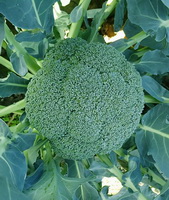 Botanical Description: Brassica oleracea L. var. italica Planch., commonly known as broccoli, is a plant of the genus Brassica and family Brassicaceae (Cruciferae, the mustard family). It originated in Italy along the Mediterranean coast of Europe and is now cultivated worldwide. Its leaves are large, and the apex of the main stem develops an enlarged inflorescence—commonly called a “head” or “curd”—which is green or purple-green. The small flower buds on the surface are not densely packed; each lateral branch terminates in a smaller inflorescence. Broccoli is a common vegetable. Its morphology and growth habits are broadly similar to those of cauliflower, but it exhibits greater vigor, heat tolerance, and cold tolerance. The plant is relatively tall. After producing over 20 leaves, it bolts, forming floral stems; compact, integrated clusters of unopened flower buds (turquoise in color) develop at the apex. Leaf color is bluish-green, gradually deepening to dark bluish-green, with increasing epicuticular wax. Petioles are long and narrow. Leaf shape varies between broad-leaf and narrow-leaf (lanceolate) types.
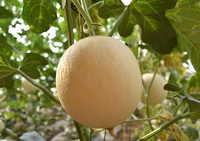 Botanical Description: Cantaloupe (Cucumis melo L.) is an annual trailing herb of the genus Cucumis and family Cucurbitaceae (the gourd or squash family). It possesses a well-developed root system: the primary root penetrates over 1 meter deep, and lateral roots extend 2–3 meters horizontally. However, its root regeneration capacity is weak, making it unsuitable for transplanting. Stems are round or angular, short-bristled, and highly branched. Leaves are alternate, suborbicular or reniform, and pilose. Flowers are axillary, unisexual (i.e., staminate and pistillate flowers occur separately on the same plant), entomophilous, and yellow. Fruit shapes include round, oval, spindle-shaped, and elongated cylindrical forms. The rind of mature fruit may be white, green, yellow, brown, or mottled with stripes and spots. The fruit surface is smooth, reticulate, furrowed, or occasionally cracked. The flesh is white, orange, green, or yellow, and aromatic. Seeds are lanceolate or oblate, varying in size. Cantaloupe is native to tropical desert regions of Africa.
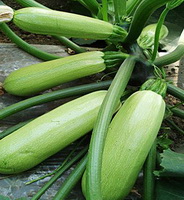 Botanical Description: Winter squash is the fruit of Cucurbita maxima Duch. ex Lam., a plant of the genus Cucurbita L. (family Cucurbitaceae, the gourd or squash family), an annual, stout, herbaceous vine. The species is native to Bolivia, Chile, and Argentina in South America and is now cultivated worldwide. Cucurbita maxima is an annual vine with thick, cylindrical stems bearing short, white bristles. Its petioles are stout and cylindrical, 15–20 cm long, and densely covered with short bristles; leaves are reniform or round-reniform; plants are monoecious; and seeds are plump, flattened, blunt, or slightly arched. Winter squash is not highly soil-specific, but sandy loam and loam soils are most suitable.
