✵The article records the herb Basil—including its English name, Latin name, Pinyin name, common names, property and flavor, botanical source (one plant species: (1) Ocimum basilicum L.)—and provides a detailed introduction to the botanical features, growth characteristics, and ecological environment of this species; the morphological features of the herb Basil; its brief history and related anecdotes; its pharmacological actions, medicinal efficacy, and administration guidelines.
Basil (Ocinum basilicum)
English Name: Basil.
Latin Name:Ocinum basilicum L. Pinyin Name: Luó Lè
Common Names: Common basil, garden basil, St. Josephwort, sweet basil, sweet basil herb
Property and Flavor: Basil has a characteristic odor and a sharp taste. In TCM works, it is recorded as having a warm nature, pungent and sweet flavor.
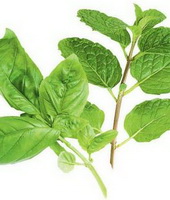
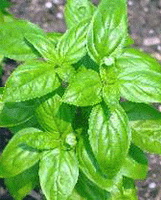
Brief Introduction: The common sweet basil, Ocimum basilicum, is an annual aromatic plant widely grown for its pleasant spicy odor and taste. Basil is a bushy aromatic annual with brittle, branched stems, growing up to 60 cm tall. There are large and dwarf cultivars, bearing oval, shiny, succulent, fragile leaves that are dark green, purple, or variegated—some grown ornamentally. Fresh leaves are approximately 5 cm long and 2 cm wide. Creamy-white flowers occur in whorls. In Finland, basil is often used to season Mediterranean-style dishes, such as tomato- and pasta-based dishes, pizzas, and salads. Fresh basil has a pungent flavor described by some as a cross between licorice and cloves. It is a key herb in Mediterranean cooking, essential to authentic Italian pesto, and is increasingly popular in American cuisine.
Botanical Source: Common herbal classics define the herb Basil as the flowering tops and dried leaves of (1) Ocimum basilicum L., a species of the genus Ocimum in the family Lamiaceae (formerly Labiatae, the mint family). In North America, the dried stem and root bark are used medicinally; in Europe, the fruit and root bark are used. This commonly used species is described below:
(1) Ocinum basilicum L.
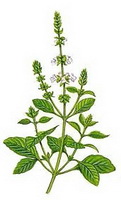
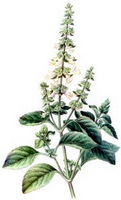
Botanical Description:Ocimum basilicum is an annual plant, growing 20–80 cm tall. The whole plant is fragrant. The stem is erect, quadrangular, and puberulent on the upper part, often reddish or purple. Leaves are opposite; petioles are 0.7–1.5 cm long and puberulent; leaf blades are ovate or ovate-lanceolate, 2.5–6 cm long and 1–3.5 cm wide, entire or sparsely serrate at the margin, nearly glabrous on both surfaces, with glandular dots near the base. Inflorescences consist of 6 cymes; bracts are small, oblanceolate (5–8 mm long), ciliate at the margin, and caducous; calyx is campanulate (bell-shaped), ~4 mm long, pubescent externally, with 5 teeth—3 upper lip teeth (the middle tooth are largest, orbicular and mucronate; lateral teeth oval and acute) and 2 lower lip teeth (triangular, acute); cilia present along the margins of all calyx teeth; calyx enlarges and persists in fruit; corolla is lilac or white, ~6 mm long, exserted from the calyx; outer lip is puberulent; upper lip is broad and 4-lobed, lobes are orbicular; lower lip is oblong and reflexed; stamens 4, with 2 longer and all exserted; posterior filament bears dentate appendages and is puberulent at the base; ovary is 4-lobed; style is nearly as long as stamens; stigma is 2-lobed; disk with 4 shallow teeth; nutlets are oblong-ovate and brown. Flowering occurs from June to September; fruiting from July to October.
Ecological Environment:Ocimum basilicum prefers a warm, humid climate and is neither cold-tolerant nor drought-tolerant nor waterlogging-tolerant. Well-drained, fertile sandy loam or humus-rich loam is optimal. Native to tropical Asia, it also grows in warm regions of Asia, the Americas, and elsewhere. Today, basil is cultivated extensively in many Mediterranean and Asian countries; major producing and supplying countries in Europe include France, Italy, Morocco, and Egypt. Significant commercial production also occurs in California, USA.
Growth Characteristics:Ocimum basilicum is native to tropical Asia; it is very sensitive to cold and grows well in hot and dry environments. Most varieties of basil have green leaves, but one—‘Opal’ basil—is a beautiful purple color. Lemon basil and cinnamon basil have green leaves, but their perfumed fragrance and flavor match their respective names. Basil is a summer herb but can be grown successfully indoors during winter in a sunny window. It is plentiful during the summer months and available year-round in many markets. Basil is a highly fragrant and aromatic herb. There are numerous types of basil available. According to the variety, the color of the leaves may vary from green to purple, and the flavor may have a hint of lemon, cinnamon, jasmine, thyme, or camphor.
The seeds should be planted early in spring in rich, moist soil, in rows 90 cm apart, at a rate of 12 to 15 seeds per 30 cm, and covered lightly with soil. Germination requires 5 to 7 days, and thinning is not necessary. Growth is rapid, and no special care beyond routine cultivation practices is required. Flowering shoots are pinched out to extend the productive life of the plants.
When the plants begin to flower, they should be cut 15 to 20 cm above the ground to harvest herbs for drying. Several cuttings may be made during the season. The green, tender leaves may be used fresh at any time. The herb can be tied in small bundles and hung in a well-ventilated, dark room or spread thinly on a screen to dry. After thorough drying, the leaves and flowering tops may be stripped from the stems and packed in airtight containers.
Characteristics of the Herb: The stems are square, of varying lengths, 1–4 mm in diameter; the surface is purple or yellowish-purple, with longitudinal grooves and a pilose appearance. The texture of the herb is hard; the fracture surface is fibrous and yellowish-white, with white pith in the center. Many leaves are detached or broken; intact ones, when flattened, are oval or lanceolate-oval, 2.5–5 cm long and 1–2.5 cm wide, with blunt or acute apices, tapering bases, irregularly serrated or nearly entire margins, glabrate on both surfaces, and glandular dots on the underside. Petioles are about 1.5 cm long and puberulent. Pseudoracemes are slightly pilose; corollas are deciduous. Bracts are oblanceolate; the persistent calyx is campanulate (bell-shaped), yellowish-brown, membranous, reticulate, externally pilose, and internally pilose. The calyx contains nutlets. When crushed, the herb emits a strong aroma, has a pungent taste, and imparts a cooling sensation. Higher-grade basil herb has thin stems and no roots.
Basil herb consists of the dried above-ground parts of Ocimum basilicum. Oil of basil is the essential oil extracted from the dried aerial parts of Ocimum basilicum by steam distillation.
Basil leaves can be harvested at any time during the growing season; the leaves are tastiest when the plants are young. Use scissors or a sharp knife when harvesting just a few leaves, as clean cuts cause the least damage to the plant. The entire upper stem and leaves can be harvested, but leave at least four sets of leaves—about 13 cm (5 inches)—or the plant may die. To ensure freshness, re-cut the stems and place them in a jug of water in a cool location. Avoid wetting the leaves, as they will discolor. Blanch the leaves and freeze them in ice cubes for later use. Freezing is the best method to preserve basil’s flavor. To dry basil, strip the leaves from the stems and dry them in a dark, airy location. Store dried leaves whole in an airtight container.
Brief History of Basil: Basil (Ocimum basilicum) belongs to the family Lamiaceae (also known as Labiatae); its leaves display an intense green color on the upper surface and a green-gray color on the lower surface. The term “basil” derives from the Greek word basilikos, meaning “royal” or “fit for a king.” It is cultivated in countries worldwide and is rich in volatile oils, the composition of which varies even within the same variety depending on growth conditions. The most aromatic, sweet, and fragrant leaves are those harvested just before flowering, as they contain a higher concentration of volatile oils responsible for the aroma; older leaves tend to have a more piquant taste.
Basil has been known since the time of the Egyptians, who used it—along with other essences—during religious ceremonies. It appears to have also been used as an ingredient in the preparation of balms for mummification. In the Middle Ages [1], it was believed to possess magical properties and was used as a defense against the “basilisk”, a mythical monster resembling a venomous serpent. Basil originated in Asia and was likely introduced to Europe by the Greeks and Romans via trade routes crossing West Asia and North Africa. Ancient Romans regarded it as a symbol of love, and it was also used as an aromatic herb in cooking; Apicius mentioned basil in a recipe with peas. It was introduced to England around the 16th century and to America in the 17th century.
In the Western world, basil is a symbol of fertility. Boccaccio recounted the story of Lisabetta, who—after secretly burying her lover’s head in the soil of a basil pot—watered it with her tears. In contrast, the Flemish physician Jan Baptist van Helmont [2] held the belief that basil placed between two bricks would transform into a scorpion.
The name “basil” is derived from the Greek word basileus (“king”), alluding to the herb’s royal fragrance. Names for basil in nearly all European languages are cognate, though they exhibit some vowel variation: Icelandic basilika, Albanian bozilok, Hungarian bazsalikom, Czech bazalka, Romanian busuioc, Provençal baseli, Basque brasilla, and Modern Greek vasilikos. During the colonial era, the name was also adopted into several African languages—for example, Ewe bebusui and Amharic besobila.
The Greek word basileus (“king”) essentially means “leader of the people”: bainein (“to go”) and laos (“people”). The first element is indeed cognate with both English come and Latin venire (from the Indo-European root gwem-); the second element has no direct cognates in Modern English, as Old English leod fell out of use in favor of the Romance loanword people. Related forms include German Leute, Old French liode, Lithuanian liaudis (“people”), and Latin liber (“free man”)—from the Indo-European root leudh- (“to grow upward”).
Names such as Italian erba reale and French herbe royale (“royal herb”), or German Königskraut and Dutch koningskruid (“king’s herb”), are likely calques of the Greek name. Despite its independent origin, the Quenya name asea aranion carries the same association: aran means “king”.
The genus name Ocimum is a Latinized form of the Greek plant name okimon, by which basil is referred to in Dioscorides’ work. It derives from the verb ozein (“to smell”)—cf. ozone (“the smelling one”) and English odor.
Pharmacological Actions: (1) Antimicrobial activity of basil and its essential oil; (2) Anthelmintic activity of basil essential oil; (3) Antiulcer activity of basil leaf; (4) Antibacterial activity; (5) Antioxidant activity.
Basil leaf exhibits antibacterial effects suitable for topical skin application and is used in wound ointments; its essential oil is employed in the treatment of acne. The antioxidant effect of basil leaf primarily stems from antioxidant constituents—including vitamin A and vitamin C—which help scavenge toxic metabolic by-products implicated in cancer cell formation. Thus, basil possesses chemopreventive properties against carcinogenesis. Basil essential oil has demonstrated efficacy against intestinal parasites and is used in remedies for associated gastrointestinal discomfort. Laboratory studies in mice have confirmed the antiulcer activity of basil leaf.
Medicinal Efficacy: Traditionally, basil leaf tea is used to treat a wide range of ailments—including intestinal parasites, congestive heart failure, alcoholism, and depression—as well as to promote diuresis, stimulate the body’s defensive responses to prevent chills and colds, and alleviate nervous exhaustion. In Mediterranean countries, basil is used as an appetite stimulant, digestive aid, and soothing agent for stomach cramps, nausea, constipation, and flatulence. Externally, it is applied to support wound healing, relieve itching and swelling from snakebites, treat ringworm and warts, disinfect wounds, and soothe throat inflammation. In European folk medicine, preparations of basil herb are used supportively for feelings of fullness and flatulence, to stimulate appetite and digestion, and as a diuretic; basil oil is traditionally applied topically for wounds, rheumatic complaints, colds and chills, contusions, joint pain, and depression.
In Traditional Chinese Medicine (TCM), basil herb is recorded as having the functions of dispelling mild wind and relieving the exterior, eliminating dampness and harmonizing the middle jiao, promoting qi circulation and activating blood, detoxifying, and reducing swelling. It is indicated for wind-cold headache and fever, cough, summer-heat stroke, food stagnation and indigestion, anorexia, abdominal distension and pain, vomiting, diarrhea, dysentery, rheumatic arthralgia, spermatorrhea, irregular menstruation, toothache, halitosis, pterygium, eczema, urticaria, pruritus, traumatic injuries, snakebite, and insect stings.
Administration of Basil (Ocinum basilicum):
Reference:
Administration Guide for Basil (Ocinum basilicum)
Herbal classic works and TCM works:
To prepare basil tea, use 3 grams of the dried herb with 150 mL of hot water. Basil oil should be avoided entirely until its potential carcinogenicity is fully established. Basil tea is prepared using 1 to 2 tsp of chopped fresh or dried herb per cup of boiling water and is consumed two to three times daily between meals. In TCM works, the herb is recommended for internal use as a water decoction (5–15 g per dose; up to 30 g for a high dose), juice extract, pills, or powder. For external use: apply an appropriate amount—either pounded fresh herb as a topical paste, charred herb (with therapeutic properties preserved) as a poultice, or a decoction for washing or mouth rinsing.
Contraindications, Precautions, and Adverse Reactions: In Europe, basil is documented as having no known health hazards or side effects when used at recommended therapeutic doses. However, it should be avoided during pregnancy due to its content of approximately 0.5% essential oil—up to 85% of which is estragole. Accordingly, basil essential oil must not be used during pregnancy or lactation, as estragole has demonstrated mutagenic activity in vitro and carcinogenic effects in animal studies. Neither basil oil nor basil leaf preparations should be administered to infants or young children. In general, basil herb or oil is contraindicated in infants, toddlers, and pregnant or lactating women.
In North America, the U.S. FDA classifies basil as “Generally Recognized as Safe” (GRAS) for food use. However, estragole—a constituent of basil—has been associated with liver tumor formation in mice; another constituent, safrole, is also reported to be carcinogenic. Nevertheless, traditional medicinal use of basil—within typical dosage ranges—has not been linked to apparent harm, and the essential oil appears nontoxic at customary exposure levels.
Explanatory Notes:
1. The Middle Ages: The period in European history extending from the collapse of Roman civilization in the 5th century CE to the onset of the Renaissance.
2. Van Helmont: Jan Baptista van Helmont (1577 or 1580–1644), a Flemish physician, philosopher, mystic, and chemist who pioneered the recognition of discrete gases and identified carbon dioxide.

 ✵The article records the herb Basil—including its English name, Latin name, Pinyin name, common names, property and flavor, botanical source (one plant species: (1) Ocimum basilicum L.)—and provides a detailed introduction to the botanical features, growth characteristics, and ecological environment of this species; the morphological features of the herb Basil; its brief history and related anecdotes; its pharmacological actions, medicinal efficacy, and administration guidelines.
 English Name: Basil.
 Botanical Description: Ocimum basilicum is an annual plant, growing 20–80 cm tall. The whole plant is fragrant. The stem is erect, quadrangular, and puberulent on the upper part, often reddish or purple. Leaves are opposite; petioles are 0.7–1.5 cm long and puberulent; leaf blades are ovate or ovate-lanceolate, 2.5–6 cm long and 1–3.5 cm wide, entire or sparsely serrate at the margin, nearly glabrous on both surfaces, with glandular dots near the base. Inflorescences consist of 6 cymes; bracts are small, oblanceolate (5–8 mm long), ciliate at the margin, and caducous; calyx is campanulate (bell-shaped), ~4 mm long, pubescent externally, with 5 teeth—3 upper lip teeth (the middle tooth are largest, orbicular and mucronate; lateral teeth oval and acute) and 2 lower lip teeth (triangular, acute); cilia present along the margins of all calyx teeth; calyx enlarges and persists in fruit; corolla is lilac or white, ~6 mm long, exserted from the calyx; outer lip is puberulent; upper lip is broad and 4-lobed, lobes are orbicular; lower lip is oblong and reflexed; stamens 4, with 2 longer and all exserted; posterior filament bears dentate appendages and is puberulent at the base; ovary is 4-lobed; style is nearly as long as stamens; stigma is 2-lobed; disk with 4 shallow teeth; nutlets are oblong-ovate and brown. Flowering occurs from June to September; fruiting from July to October.
 Ecological Environment: Ocimum basilicum prefers a warm, humid climate and is neither cold-tolerant nor drought-tolerant nor waterlogging-tolerant. Well-drained, fertile sandy loam or humus-rich loam is optimal. Native to tropical Asia, it also grows in warm regions of Asia, the Americas, and elsewhere. Today, basil is cultivated extensively in many Mediterranean and Asian countries; major producing and supplying countries in Europe include France, Italy, Morocco, and Egypt. Significant commercial production also occurs in California, USA.
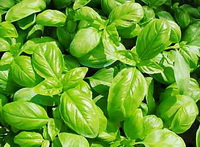 Growth Characteristics: Ocimum basilicum is native to tropical Asia; it is very sensitive to cold and grows well in hot and dry environments. Most varieties of basil have green leaves, but one—‘Opal’ basil—is a beautiful purple color. Lemon basil and cinnamon basil have green leaves, but their perfumed fragrance and flavor match their respective names. Basil is a summer herb but can be grown successfully indoors during winter in a sunny window. It is plentiful during the summer months and available year-round in many markets. Basil is a highly fragrant and aromatic herb. There are numerous types of basil available. According to the variety, the color of the leaves may vary from green to purple, and the flavor may have a hint of lemon, cinnamon, jasmine, thyme, or camphor.
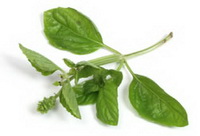 Characteristics of the Herb: The stems are square, of varying lengths, 1–4 mm in diameter; the surface is purple or yellowish-purple, with longitudinal grooves and a pilose appearance. The texture of the herb is hard; the fracture surface is fibrous and yellowish-white, with white pith in the center. Many leaves are detached or broken; intact ones, when flattened, are oval or lanceolate-oval, 2.5–5 cm long and 1–2.5 cm wide, with blunt or acute apices, tapering bases, irregularly serrated or nearly entire margins, glabrate on both surfaces, and glandular dots on the underside. Petioles are about 1.5 cm long and puberulent. Pseudoracemes are slightly pilose; corollas are deciduous. Bracts are oblanceolate; the persistent calyx is campanulate (bell-shaped), yellowish-brown, membranous, reticulate, externally pilose, and internally pilose. The calyx contains nutlets. When crushed, the herb emits a strong aroma, has a pungent taste, and imparts a cooling sensation. Higher-grade basil herb has thin stems and no roots.
 Brief History of Basil: Basil (Ocimum basilicum) belongs to the family Lamiaceae (also known as Labiatae); its leaves display an intense green color on the upper surface and a green-gray color on the lower surface. The term “basil” derives from the Greek word basilikos, meaning “royal” or “fit for a king.” It is cultivated in countries worldwide and is rich in volatile oils, the composition of which varies even within the same variety depending on growth conditions. The most aromatic, sweet, and fragrant leaves are those harvested just before flowering, as they contain a higher concentration of volatile oils responsible for the aroma; older leaves tend to have a more piquant taste.
