✵TCM herbalism is also known as the pharmaceutics of Traditional Chinese Medicine or Chinese pharmaceutics. It is the branch of health science dealing with the preparation, dispensing, and proper utilization of Chinese herbs. It is primarily composed of Introduction to Chinese Medicinals, Classification of Chinese Herbs, Formulas, and Patent Medicines.
Herbs Tranquilizers
Introduction: Herbal tranquilizers—also known as sedative or calming herbs—are agents derived from medicinal plants, minerals, or other natural substances that calm the mind and relieve mental tension. These herbs function to tranquilize and alleviate restlessness of both body and mind, and are used clinically in the treatment of conditions such as agitation, anxiety, insomnia, and delirium. Based on their primary mechanisms and therapeutic actions, herbal tranquilizers are classified into two major categories: (1) settling tranquilizing herbs and (2) heart-nourishing tranquilizing herbs.
Tranquilizing herbs are predominantly mineral-based or derived from shells; they exert a downward-anchoring, calming effect and are thus termed “heavy-settling.” Heart-nourishing tranquilizers are mainly plant-derived—especially seeds and kernels—and possess moistening, nourishing, and blood-tonifying properties that support the heart and calm the shen (spirit); hence, they are termed “heart-nourishing.” These herbs are primarily indicated for symptoms including restlessness, palpitations (especially those triggered by fright), insomnia, forgetfulness, vivid dreaming, infantile convulsions, epilepsy, mania, and related disorders.
Settling tranquilizing herbs induce tranquility through their inherently heavy, sinking nature. Most are minerals or shell-derived substances. Their principal actions include anchoring the yang, calming liver-yang hyperactivity, subduing ascending liver fire, and stabilizing the shen. They are chiefly used for syndromes characterized by restlessness, palpitations, insomnia, fright-induced epilepsy or mania, and liver-yang rising—often resulting from excess patterns such as heart-fire exuberance, phlegm-fire disturbing the heart, or traumatic fright. Representative herbs include Magnetitum (Cí Shí), and other herbs include Succinum (Hǔ Pò), and Margarita (Zhēn Zhū).
Heart-nourishing tranquilizing herbs nourish the heart and calm the shen via blood and yin supplementation. Most are sweet in flavor and moistening in nature. Their core functions include nourishing the heart and liver, replenishing blood, harmonizing the heart-kidney relationship, and anchoring the shen. They are primarily employed for deficiency-type syndromes such as palpitations (mild or severe), insomnia with dream-disturbed sleep, insomnia accompanied by deficient restlessness, forgetfulness, and lassitude—commonly arising from yin-blood insufficiency, heart-spleen deficiency, or heart-kidney disharmony. Representative herbs include Semen Ziziphi Spinosae (Suān Zǎo Rén), Radix Polygalae (Yuǎn Zhì), and other herbs include Semen Platycladi (Bǎi Zǐ Rén), Cortex Albiziae (Hé Huān Pí), Flos Albiziae (Hé Huān Huā), Ganoderma lucidum (Línɡ Zhī), Caulis Polygoni Multiflori (Shǒu Wū Ténɡ), Poria cum Radice Pini (Fú Shén), and Rhizoma Valerianae (Xiè Cǎo).
✵As of January 1, 2024, this category encompasses a total of [12] commonly used TCM herbs, representing [10] plant species, [64] fungal species, [7] animal species, and [2] mineral substances.
✵As of January 1, 2024, this subgroup comprises [3] commonly used TCM herbs, [7] animal-derived species (primarily shellfishes), and [2] mineral substances. Brief descriptions of these herbs follow.
Succinum (Amber)
Brief Introduction: The herb Succinum is a yellowish or brownish fossilized resin, used (1) as a sedative for the treatment of insomnia, dream-disturbed sleep, palpitations, and convulsions, and (2) as a diuretic and hemostatic agent for urodynia and hematuria caused by acute urinary tract infection and urinary calculi. The herb is commonly known as Amber, Succinum, or Hǔ Pò. more
Magnetitum (Magnetite)
Brief Introduction: The herb Magnetitum is magnetic iron ore composed mainly of ferroferric oxide (Fe3O4). It is used as a sedative–tranquilizing and antiasthmatic agent for treating tinnitus, palpitations, insomnia, epilepsy, and mania, and also for relieving asthma. The herb is commonly known as Magnetitum, Magnetite, or Cí Shí. more
Margarita (Pearl)
Brief Introduction: The herb Margarita is a lustrous concretion formed within certain bivalve mollusks—e.g., Pteria martensii (Dunker), Hyriopsis cumingii (Lea), and Cristaria plicata (Leach) (family Unionidae)—and is used (1) as a sedative–tranquilizing and anticonvulsant agent for treating convulsions due to high fever or infantile convulsions, and (2) externally to promote wound healing. The herb is commonly known as Margarita, Pearl, or Zhēn Zhū. more
✵As of January 1, 2024, this subgroup comprises [9] commonly used TCM herbs, representing [10] plant species and [64] fungal species. Brief descriptions of these herbs follow.
Semen Ziziphi Spinosae (Spine Date Seed)
Brief Introduction:Semen Ziziphi Spinosae is the dried, ripe seed of Ziziphus jujuba Mill. var. spinosa (Bunge) Hu ex H. F. Chow. It is used (1) as a sedative to treat restlessness, insomnia, and palpitations, and (2) to arrest spontaneous and nocturnal sweating. Common names include Semen Ziziphi Spinosae, Spine Date Seed, and Suān Zǎo Rén. more
Radix Polygalae (Thin-leaf Milkwort Root)
Brief Introduction:Radix Polygalae is the dried root of Polygala tenuifolia Willd. or Polygala sibirica L. It is clinically employed: (1) as a sedative for palpitations and insomnia due to Heart–Kidney disharmony; (2) as an expectorant for acute or chronic cough with profuse sputum; (3) to resolve phlegm and open the orifices in epilepsy and mania caused by phlegm obstruction of the Heart orifice; and (4) to reduce swelling in boils and sores. Common vernacular names include Thin-leaf Milkwort Root, Thin-leaf Milkwort Root-bark, Siberian Milkwort Root, and Yuǎn Zhì. more
Semen Platycladi (Chinese Arborvitae Seed)
Brief Introduction:Semen Platycladi is the kernel of the dried, ripe seed of Platycladus orientalis (L.) Franco. It is used (1) to nourish the heart and calm the spirit for treating palpitations and insomnia due to Heart-Blood deficiency, and (2) as a moistening laxative for constipation in debilitated or elderly patients. Common names include Semen Platycladi, Chinese Arborvitae Seed, and Bǎi Zǐ Rén. more
Cortex Albiziae (Silktree Albizia Bark)
Brief Introduction:Cortex Albiziae is the dried stem bark of Albizia julibrissin Durazz. It is used (1) as a sedative to alleviate palpitations and insomnia caused by anxiety, and (2) to invigorate blood circulation and relieve pain in the treatment of traumatic swellings, boils, and sores. Commonly known names include Cortex Albiziae, silktree albizia bark, bark of silktree albizia, and Hé Huān Pí. more
Flos Albiziae (Albizia Flower)
Brief Introduction:Flos Albiziae is the dried inflorescence of Albizia julibrissin Durazz., used as a sedative to treat restlessness and insomnia. Commonly known names include Flos Albiziae, Albizia Flower, and Hé Huān Huā. more
Ganoderma Lucidium (Lucid Ganoderma)
Brief Introduction: The herb Ganoderma lucidum is the dried fruiting body of the fungus Ganoderma lucidum (Leyss. ex Fr.) Karst. It is used (1) as a tranquilizer to treat dizziness and insomnia, and (2) as a tonic to treat weakness or debility. It is commonly known as Ganoderma lucidum, Lucid Ganoderma, Reishi, Fairy Grass, or Línɡ Zhī. more
Caulis Polygoni Multiflori (Fleece-flower Stem)
Brief Introduction:Caulis Polygoni Multiflori is the dried twining stem of Polygonum multiflorum Thunb. It is used (1) as a heart-nourishing tranquilizer for treating insomnia and dream-disturbed sleep, and (2) to activate blood circulation in the collaterals for treating aching limbs. The herb is commonly known as Caulis Polygoni Multiflori, fleece-flower stem, or Shǒu Wū Téng. more
Poria cum Radice Pini (Fu-shen)
Brief Introduction:Poria cum Radice Pini is a fungal sclerotium of Poria cocos that naturally incorporates a fragment of pine root (Pinus massoniana or related species). It is used as a tranquilizing herb for palpitations and insomnia. The herb is commonly known as Poria cum Radice Pini, Fu Shen, or Tuckahoe with Pine Root. more
Rhizoma Valerianae (Valerian Rhizome)
Brief Introduction:Rhizoma Valerianae is the dried rhizome of Valeriana officinalis L., used (1) as a sedative to treat insomnia and (2) to regulate Qi flow to relieve abdominal distension and pain. Commonly known names include Rhizoma Valerianae, Valerian Rhizome, Valerian Root, and Xié Cǎo. more

 ✵TCM herbalism is also known as the pharmaceutics of Traditional Chinese Medicine or Chinese pharmaceutics. It is the branch of health science dealing with the preparation, dispensing, and proper utilization of Chinese herbs. It is primarily composed of Introduction to Chinese Medicinals, Classification of Chinese Herbs, Formulas, and Patent Medicines.
 Introduction: Herbal tranquilizers—also known as sedative or calming herbs—are agents derived from medicinal plants, minerals, or other natural substances that calm the mind and relieve mental tension. These herbs function to tranquilize and alleviate restlessness of both body and mind, and are used clinically in the treatment of conditions such as agitation, anxiety, insomnia, and delirium. Based on their primary mechanisms and therapeutic actions, herbal tranquilizers are classified into two major categories: (1) settling tranquilizing herbs and (2) heart-nourishing tranquilizing herbs.
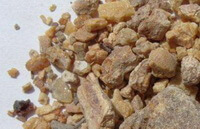 Brief Introduction: The herb Succinum is a yellowish or brownish fossilized resin, used (1) as a sedative for the treatment of insomnia, dream-disturbed sleep, palpitations, and convulsions, and (2) as a diuretic and hemostatic agent for urodynia and hematuria caused by acute urinary tract infection and urinary calculi. The herb is commonly known as Amber, Succinum, or Hǔ Pò. more

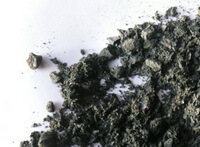 Brief Introduction: The herb Magnetitum is magnetic iron ore composed mainly of ferroferric oxide (Fe3O4). It is used as a sedative–tranquilizing and antiasthmatic agent for treating tinnitus, palpitations, insomnia, epilepsy, and mania, and also for relieving asthma. The herb is commonly known as Magnetitum, Magnetite, or Cí Shí. more
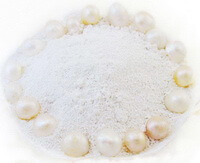 Brief Introduction: The herb Margarita is a lustrous concretion formed within certain bivalve mollusks—e.g., Pteria martensii (Dunker), Hyriopsis cumingii (Lea), and Cristaria plicata (Leach) (family Unionidae)—and is used (1) as a sedative–tranquilizing and anticonvulsant agent for treating convulsions due to high fever or infantile convulsions, and (2) externally to promote wound healing. The herb is commonly known as Margarita, Pearl, or Zhēn Zhū. more
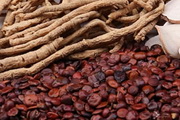 Introduction: Heart-nourishing tranquilizing herbs include:Semen Ziziphi Spinosae (Spine Date Seed), Radix Polygalae (Thin-leaf Milkwort Root), Semen Platycladi (Chinese Arborvitae Seed), Cortex Albiziae (Silktree Albizia Bark), Flos Albiziae (Albizia Flower), Ganoderma Lucidium (Lucid Ganoderma), Caulis Polygoni Multiflori (Fleece-flower Stem), Poria cum Radice Pini (Fu-shen), Rhizoma Valerianae (Valerian Rhizome).
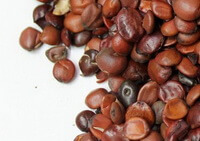 Brief Introduction: Semen Ziziphi Spinosae is the dried, ripe seed of Ziziphus jujuba Mill. var. spinosa (Bunge) Hu ex H. F. Chow. It is used (1) as a sedative to treat restlessness, insomnia, and palpitations, and (2) to arrest spontaneous and nocturnal sweating. Common names include Semen Ziziphi Spinosae, Spine Date Seed, and Suān Zǎo Rén. more
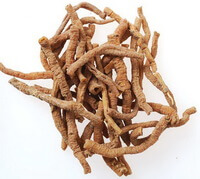 Brief Introduction: Radix Polygalae is the dried root of Polygala tenuifolia Willd. or Polygala sibirica L. It is clinically employed: (1) as a sedative for palpitations and insomnia due to Heart–Kidney disharmony; (2) as an expectorant for acute or chronic cough with profuse sputum; (3) to resolve phlegm and open the orifices in epilepsy and mania caused by phlegm obstruction of the Heart orifice; and (4) to reduce swelling in boils and sores. Common vernacular names include Thin-leaf Milkwort Root, Thin-leaf Milkwort Root-bark, Siberian Milkwort Root, and Yuǎn Zhì. more
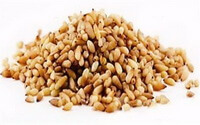 Brief Introduction: Semen Platycladi is the kernel of the dried, ripe seed of Platycladus orientalis (L.) Franco. It is used (1) to nourish the heart and calm the spirit for treating palpitations and insomnia due to Heart-Blood deficiency, and (2) as a moistening laxative for constipation in debilitated or elderly patients. Common names include Semen Platycladi, Chinese Arborvitae Seed, and Bǎi Zǐ Rén. more
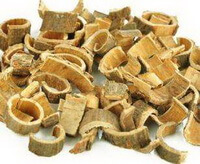 Brief Introduction: Cortex Albiziae is the dried stem bark of Albizia julibrissin Durazz. It is used (1) as a sedative to alleviate palpitations and insomnia caused by anxiety, and (2) to invigorate blood circulation and relieve pain in the treatment of traumatic swellings, boils, and sores. Commonly known names include Cortex Albiziae, silktree albizia bark, bark of silktree albizia, and Hé Huān Pí. more
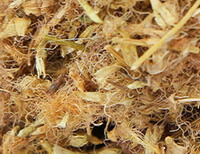 Brief Introduction: Flos Albiziae is the dried inflorescence of Albizia julibrissin Durazz., used as a sedative to treat restlessness and insomnia. Commonly known names include Flos Albiziae, Albizia Flower, and Hé Huān Huā. more
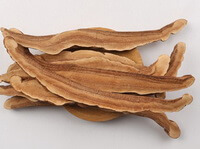 Brief Introduction: The herb Ganoderma lucidum is the dried fruiting body of the fungus Ganoderma lucidum (Leyss. ex Fr.) Karst. It is used (1) as a tranquilizer to treat dizziness and insomnia, and (2) as a tonic to treat weakness or debility. It is commonly known as Ganoderma lucidum, Lucid Ganoderma, Reishi, Fairy Grass, or Línɡ Zhī. more
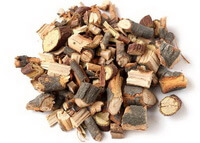 Brief Introduction: Caulis Polygoni Multiflori is the dried twining stem of Polygonum multiflorum Thunb. It is used (1) as a heart-nourishing tranquilizer for treating insomnia and dream-disturbed sleep, and (2) to activate blood circulation in the collaterals for treating aching limbs. The herb is commonly known as Caulis Polygoni Multiflori, fleece-flower stem, or Shǒu Wū Téng. more
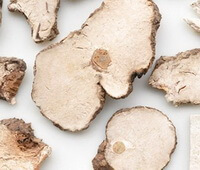 Brief Introduction: Poria cum Radice Pini is a fungal sclerotium of Poria cocos that naturally incorporates a fragment of pine root (Pinus massoniana or related species). It is used as a tranquilizing herb for palpitations and insomnia. The herb is commonly known as Poria cum Radice Pini, Fu Shen, or Tuckahoe with Pine Root. more
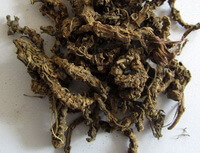 Brief Introduction: Rhizoma Valerianae is the dried rhizome of Valeriana officinalis L., used (1) as a sedative to treat insomnia and (2) to regulate Qi flow to relieve abdominal distension and pain. Commonly known names include Rhizoma Valerianae, Valerian Rhizome, Valerian Root, and Xié Cǎo. more
