
Don’t rush to make your bed when you wake up.
- Introduction.
-
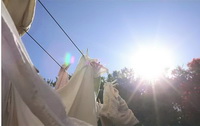 Introduction: Do not fold the quilt immediately after getting up in the morning. Leaving it unfolded allows moisture from the air to dissipate and prevents mites from thriving—many eventually die of dehydration. However, airing the quilt in direct sunlight is a healthier and more hygienic practice.
Ancient custom holds that “during the hottest days of summer, clothes should be sun-dried,” based on the belief that “sunlight disinfects fabrics.” This implies that quilts, having been in prolonged contact with the human body, can harbor bacteria and other microorganisms.
- Don’t rush to make your bed when you wake up.
-
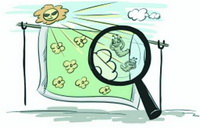 Many people fold their quilts right after waking. Yet a study by scientists at Kingston University, England, suggests that delaying bed-making may actually benefit health—a finding reported by the BBC. Airing the quilt outdoors or near a well-ventilated area helps inhibit bacterial growth. While ideal sun-drying conditions aren’t available daily, allowing your quilt to “breathe” each morning—even briefly—is a simple, health-supportive habit. Since quilts remain in close contact with our bodies overnight, they must not become breeding grounds for pathogens.
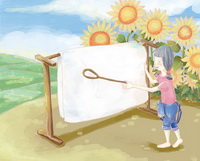
 Don’t rush to fold the quilt after getting up in the morning. Let it remain unfolded for 2–3 hours before folding. If your room has a south-facing balcony, place the quilt on the bed or on a drying rack to maximize airflow. Sun-drying provides superior antimicrobial effects compared to simply leaving the quilt unfolded. The optimal time for sun-drying on clear days is between 11 a.m. and 2 p.m.; 2–3 hours is sufficient. In winter, cotton quilts benefit from 3–4 hours of sun exposure, during which cotton fibers expand slightly. Wool quilts require infrequent sunning—and must never be exposed to intense heat—as high temperatures cause natural oils in wool and feathers to oxidize, producing rancid odors. Such quilts need only 1 hour of ventilation in a shaded, airy location. Synthetic-fiber quilts may be sunned for 1–2 hours. Cotton quilts with synthetic-fiber outer layers should not be sun-dried directly; excessive heat may damage the fabric. Instead, cover them with a thin cloth during sunning to protect the surface. Wool and down duvets possess excellent moisture-absorbing and dehumidifying properties and rarely require sunning. If aired outdoors, cover them with a light cloth and ventilate for 1–2 hours. Avoid beating or patting any quilt during sunning: cotton fibers are coarse, short, and fragile—beating causes them to break and release dust. Synthetic fibers are fine and long but prone to permanent deformation; tapping flattens them irreversibly, leading to hardening. To remove surface dust, gently sweep with a soft brush. Down duvets must never be beaten, as this damages delicate down clusters and releases fine “feather dust,” compromising insulation and warmth.
- Health benefits:
-
 ✵1. Ventilation: During sleep, human skin releases substantial water vapor, and respiration plus pore secretions emit various gases and sweat. Folding the quilt immediately traps moisture and metabolic residues inside, preventing evaporation and turning the quilt into a potential reservoir of pollutants—harmful to health.
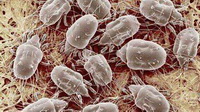
✵2. Mite suppression: Scientific estimates indicate even clean bedding hosts nearly 15 million dust mites—microscopic organisms (<1 mm) feeding on shed skin cells and producing allergenic waste. Their proliferation depends critically on residual moisture and humidity within bedding. Once the body leaves the bed, ambient moisture cannot re-enter if the quilt remains unfolded, accelerating mite dehydration and mortality.
 ✵3. Allergy reduction: Though an unmade bed may appear untidy, it significantly restricts the growth of dust mites and other allergen-producing organisms—thereby alleviating symptoms for individuals with dust allergies or asthma.
✵Tips: When sun-drying indoors, open the glass window and keep only the insect screen closed. Ordinary glass blocks most ultraviolet (UV) radiation; without direct UV exposure, the germicidal effect is negligible.
Edited and last revised:
